
What Makes an Options Strategy Advanced?
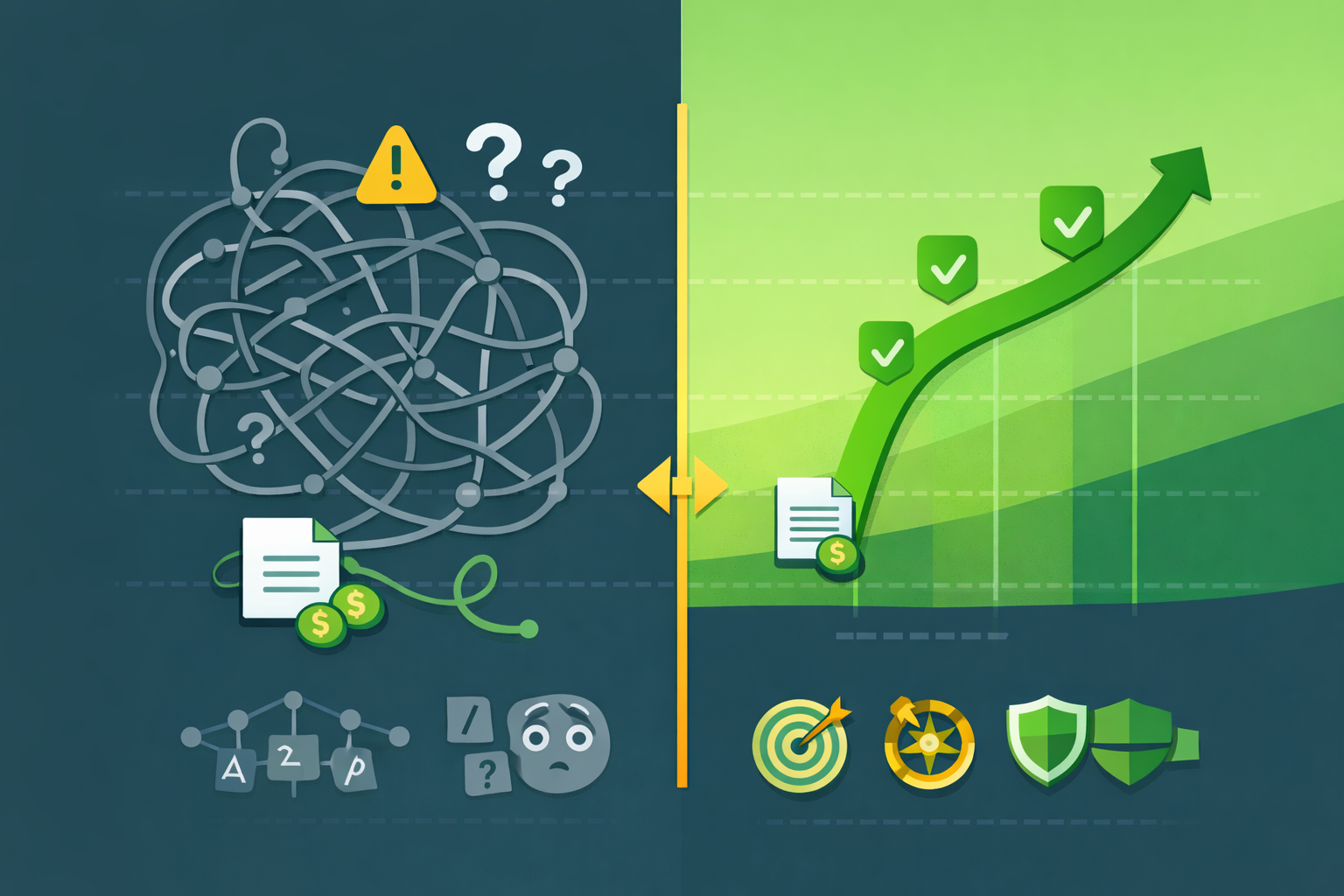
Most investors think "advanced" means complicated, multi-leg trades with Greek letters and exotic names. That's not what we mean at Wall St Yardie. Advanced strategies are about sophistication, not complexity. The difference? Complexity adds steps. Sophistication adds precision.
TL;DR
- Sophistication means better control: Advanced strategies give you precise control over entry, exit, and risk without making things complicated
- Complexity without purpose fails: Strategies with too many moving parts often reduce returns and increase mistakes
- Value principles come first: An advanced strategy still respects intrinsic value, margin of safety, and business quality
- Discipline scales up: Advanced doesn't mean riskier, it means applying the same discipline with more refined tools
- Know when to stay simple: The best investors use advanced tools only when they meaningfully improve outcomes
The Difference Between Complexity and Sophistication
Complexity is adding more parts. Sophistication is adding more precision. A trade with five legs, ten contracts, and four different expirations might look advanced, but if it doesn't improve your risk-adjusted return or better express your valuation thesis, it's just noise.
Take covered calls. You own 100 shares of "QualityCo" trading at $100, and you sell a $110 call expiring in 30 days for $2. Simple. Now imagine you layer three different expirations, 30 days, 60 days, 90 days, at different strikes, $108, $112, $115, to smooth income and reduce assignment risk. That's sophisticated. Same core strategy, but now you control timing, reduce volatility drag, and manage opportunity cost better.
The question is always: does this extra step make my outcome more predictable, safer, or better aligned with my valuation target? If yes, it's sophisticated. If no, it's complexity for complexity's sake.
What Makes a Strategy Advanced for Value Investors
For value investors, an advanced strategy isn't just about technique, it's about aligning precision tools with first principles. Here's what qualifies:
Better control over entry and exit: A cash-secured put is simple. Layering multiple put strikes around your intrinsic value estimate to scale into a position gradually? That's advanced. You're using options to express exactly where you want to own the stock, in smaller, controlled increments.
Risk management without sacrificing upside: Protective puts are straightforward insurance. Pairing protective puts with premium income from covered calls to offset the cost? That's sophisticated risk control. You're managing downside while still participating in gains and funding the hedge.
Capital efficiency with discipline: Buying LEAPs is intermediate. Using LEAPs as a stock substitute, then selling short-term calls against them (the poor man's covered call) to generate income while maintaining leverage? Advanced. You're controlling more shares with less capital while creating recurring cash flow.
Precision around valuation: Selling a single covered call is basic. Selling calls only when the stock approaches your fair value estimate, then rolling or adjusting strikes as valuation changes? That's advanced execution. You're not just collecting premiums, you're using options to express your evolving valuation thesis.
Advanced Doesn't Mean Risky
Beginners often confuse "advanced" with "aggressive." That's backwards. Advanced strategies, done right, reduce risk. They give you more ways to protect capital, manage volatility, and avoid forced decisions.
Let's say you own QualityCo at $100, and it drops to $85. A beginner might panic or hold frozen. An advanced investor might roll a covered call down to a $90 strike, collecting premium to lower cost basis, or sell a new put at $80 to average in if it keeps falling. The advanced approach gives more options (literally) to respond without emotion.
The key is that advanced strategies require more attention, not more risk. You need to monitor positions, understand how Greeks interact, and adjust when conditions change. If you're not ready to do that work, stay simple. There's no shame in covered calls and cash-secured puts for life, they work.
When Simple Beats Advanced
Sophistication has diminishing returns. If you're managing a small portfolio (under $50,000) or new to options, don't go advanced. The effort and transaction costs often outweigh the benefits.
Let's say you have $20,000 and own 100 shares of QualityCo. A simple covered call strategy, selling one monthly call, takes five minutes per month and generates consistent income. Layering three expirations and managing rolls might improve returns by 1-2% annually, but now you're spending hours tracking, adjusting, and paying more commissions. Not worth it.
Advanced strategies make sense when:
- You have enough capital to spread across multiple positions (at least $100,000)
- You're managing concentrated positions (more than 20% in a single stock) and need precision risk control
- You're experienced enough that execution is automatic, not stressful
- The strategy meaningfully improves your outcome (at least 3-5% better risk-adjusted return)
If those don't apply, stick with the basics. Simple, consistent, and repeatable beats complex and inconsistent every time.
The Test of True Sophistication
Here's the real test: can you explain your strategy in one sentence to someone who doesn't trade options? If you can, it's probably sophisticated. If you can't, it's probably just complicated.
Example: "I'm selling covered calls at strikes near fair value to generate income while the stock compounds." Simple, clear, sophisticated.
Compare that to: "I'm running a ratio spread with short delta hedges and gamma scalping to capture volatility skew." Maybe impressive, but not value investing.
Advanced strategies should make your life easier, not harder. They should give you clarity, not confusion. And they should improve results in a way you can measure and repeat.
What Could Go Wrong?
- Overengineering reduces returns: Adding too many legs, strikes, or adjustments often increases costs and mistakes more than it improves outcomes
- Complexity creates blind spots: Multi-part strategies can hide risks you didn't intend to take, especially around assignment or margin
- Distraction from fundamentals: Focusing on sophisticated execution can pull attention away from what matters most, business quality and valuation
- Higher costs erode gains: More trades mean more commissions, wider spreads, and more tax events, all of which drag on returns
- Emotional exhaustion: Managing complex positions is stressful. If the strategy causes anxiety, it's working against you, not for you
Mitigation: Start with the simplest version of a strategy. Add complexity only when you can clearly explain why it improves your outcome. Track results. If the advanced version doesn't beat the simple version by a meaningful margin, drop it.
Next Steps
- Learn when advanced strategies are appropriate within a value framework
- Understand the poor man's covered call for capital efficiency
- Master rolling techniques to adjust without losing discipline
- Explore protective puts for downside insurance
- Review covered call fundamentals before advancing
Advanced strategies are tools, not trophies. Use them when they make your investing more precise, safer, and better aligned with value principles. When in doubt, keep it simple. Sophistication without results is just complexity in disguise.
*Disclaimer: This content is for educational purposes only and does not constitute financial advice. Past performance does not guarantee future results. Always conduct your own research before investing.*