
What is a Covered Call?
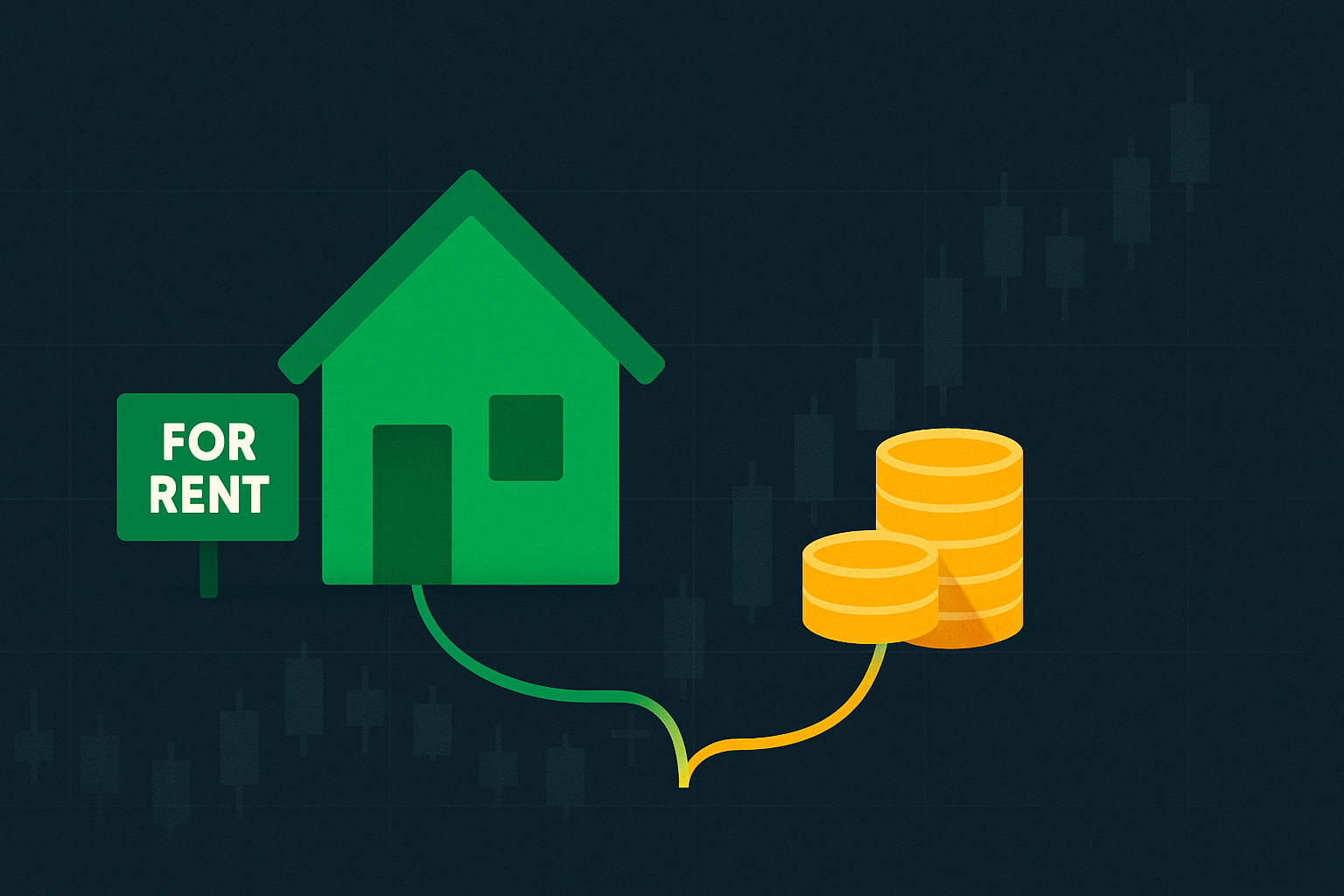
Think of covered calls as getting paid rent for stocks you already own. It's one of the most conservative options strategies—perfect for value investors who want to squeeze extra income from their portfolio while they wait for stocks to reach fair value.
TL;DR
- Covered call = own the stock + sell a call option: You collect premium income while keeping the stock (unless it gets "called away")
- Conservative strategy: Much safer than speculative options trading because you already own the underlying stock
- Extra income: Generate 1-3% monthly returns on top of dividends and capital gains
- Value investor friendly: Works best on close to fair value stocks you're holding long-term
- Limited upside: You cap your gains at the strike price sold but keep all premium income
The Simple Definition
A covered call means you own 100 shares of a stock and sell someone else the right to buy those shares from you at a specific price (the "strike price") by a certain date (expiration). In return, you collect a premium—cash in your pocket immediately.
Here's the key difference from speculative options trading: you actually own the stock. This makes it "covered" because if the option gets exercised, you can deliver the shares you already have. No naked risk, no margin calls, no sleepless nights.
Think of it like being a landlord. You own the property (stock), and you rent it out (sell the call option) for monthly income. If the tenant decides to buy the house (option gets exercised), you sell at your predetermined price and move on to the next opportunity.
How It Actually Works
Let's say you own 100 shares of "ABC Manufacturing" trading at $45 per share. You think the stock is worth $60 based on your value analysis, but the market hasn't figured this out yet. Instead of just waiting, you can sell a covered call.
You might sell a $50 call option expiring in 30 days for $200 premium. Here's what happens:
Scenario 1 - Stock stays below $50: The option expires worthless, you keep your shares AND the $200 premium. Your effective cost basis drops from $45 to $43 per share ($200 ÷ 100 shares = $2 reduction).
Scenario 2 - Stock rises above $50: Your shares get "called away" at $50. You make $500 capital gain ($50 - $45) plus the $200 premium, totaling $700 profit on a $4,500 investment—a 15.6% return in one month.
A Real Numbers Example
Let's walk through a complete covered call trade on a value stock:
- Stock: "Solid Industries" trading at $40/share
- Your position: 100 shares you bought at $40/share ($4,000 investment)
- Your fair value estimate: $55/share
- Action: Sell $45 strike call expiring in 45 days ($45 is 80% of the $55 fair value, this is when we might look to sell calls)
- Premium collected: $180
If stock stays below $45: You keep shares + $180 premium. Your new cost basis becomes $38.20/share ($40 - $1.80). If you repeat this monthly, you could generate $180 × 8 (there's only 8, 45 day periods in a year) = $1,440 annual income (36% yield) while waiting for the stock to reach fair value.
If stock rises above $45: Shares called away at $45. Total profit = $500 capital gain + $180 premium = $680 profit (17% return) in 45 days. Not bad for a "conservative" strategy!
Why This Isn't Speculative Trading
Here's what separates covered calls from casino-style options trading:
You own the asset: Unlike naked call selling or buying random options, you have real shares generating real dividends and building real wealth.
Value-based foundation: You're only doing this on stocks you've analyzed and want to own anyway. The option income is bonus cash flow.
Limited downside: Your risk (maximum loss) is the cost basis of the stock (same as owning the stock outright), minus the premium you collected. No exotic derivatives or leveraged bets.
Time works for you: Even if the stock goes nowhere, you collect premium income month after month. Time decay becomes your friend instead of your enemy all while reducing your cost basis.
What Could Go Wrong?
Opportunity cost: If your stock rockets past the strike price, you miss out on gains above that level. Your $40 stock might hit $60, but you only get $45.
Mitigation: Choose strike prices based on your fair value estimates, use WSY app to check fair value. If ABC Manufacturing is worth $55, selling $50 calls gives you most of the upside while generating income. Don't get greedy and sell calls too close to the current price.
Stock decline: Collecting $200 premium doesn't help much if your $4,000 stock position drops to $3,000.
Mitigation: Only sell covered calls on quality companies you've thoroughly analyzed. The underlying business strength matters more than the option premium. Stick to your value investing principles and trade quality!
Assignment timing: You might get assigned right before an ex-dividend date, missing out on the dividend payment.
Mitigation: Track dividend dates and consider closing positions before ex-dividend if the premium has shrunk. Sometimes it's worth buying back the call to keep the dividend.
Next Steps: Your Covered Call Checklist
- Start with stocks you already own: Don't buy stocks just to sell calls—that's putting the cart before the horse
- Choose quality companies: Only use this strategy on businesses you'd be happy to hold for years (the Toppa Di Top)
- Paper trade first: Practice on virtual platforms before risking real money
- Set realistic strike prices: Base them on your intrinsic value calculations See the App, not maximum premium
- Track the Greeks: Learn how Delta and Theta affect your positions
- Plan your exit: Know in advance when you'll close, roll, or let the position expire
- Keep position size reasonable: Start with 1-2 positions maximum until you gain experience
- Study income generation: Explore how covered calls fit into a broader income strategy
Remember, covered calls aren't about hitting home runs—they're about generating steady base hits while you build long-term wealth. The goal is turning lazy money (stocks just sitting there) into working capital that pays you monthly. Keep the riddim steady, and let compound income work its magic over time.
The beauty of covered calls is their simplicity. You're not trying to time the market or predict volatility spikes. You're just collecting rent on assets you already own. That's value investing with a options twist, Wall St. Yardie style.
*Disclaimer: This content is for educational purposes only and does not constitute financial advice. Past performance does not guarantee future results. Always conduct your own research before investing.*