
The Wheel Strategy for Value Investors
Most investors treat assignment like a mistake. The wheel strategy flips that idea on its head. When you sell a put on a wonderful company below fair value, assignment isn't failure, it's part of the plan. You wanted to own that business anyway.
TL;DR
- Sell cash-secured puts on undervalued companies you'd own at that strike
- If assigned, own the stock and immediately transition to covered calls
- Roll the wheel by continuing calls until called away, then restart with puts
- Assignment becomes intentional ownership, not a trading accident
- Position sizing and fair value analysis matter more than premium yield
What the Wheel Strategy Actually Does
The wheel combines two income strategies you already know: cash-secured puts and covered calls. But instead of using them separately, you connect them into a cycle.
Start with cash. Sell a cash-secured put on a quality company trading below intrinsic value. If the stock stays above your strike, you collect the premium and do it again. If the stock drops and you get assigned, you own shares at a discount to fair value.
Once you own the stock, you sell covered calls above your cost basis. If the stock rises and gets called away, you keep the premium and the capital gain. Then you restart the cycle by selling another put.
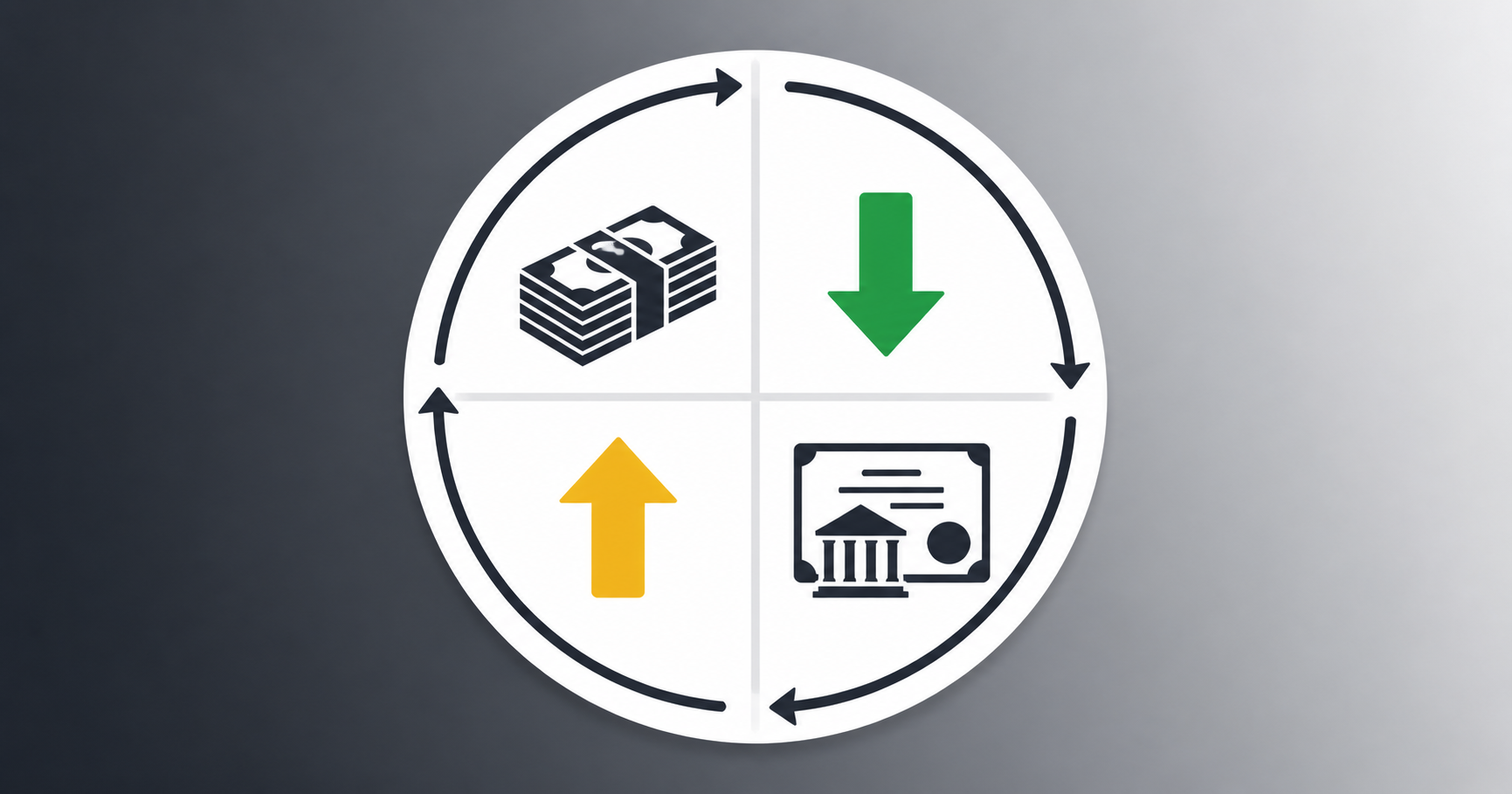
That's the wheel: cash to puts, puts to stock, stock to calls, calls back to cash. Each step generates income. Each transition happens because price moved in your favor or stayed flat.
Why This Works for Value Investors
The wheel forces discipline. You only sell puts on companies you actually want to own. You only choose strikes that align with your valuation work. You can't chase premium on junk stocks because assignment would stick you with something you don't believe in.
This strategy also removes the emotional weight of assignment. Most beginners panic when assigned on a put because they see it as losing money. Value investors know better. If you sold a put at $90 on a stock worth $110, assignment at $90 is exactly what you wanted. You just bought a wonderful business at a 18% discount.
The covered call side works the same way. If your stock gets called away at $100 and fair value is $110, you made money but left some on the table. That's fine. The wheel isn't about squeezing every dollar out of one position. It's about steady, repeatable income tied to valuation logic.
A Simple Wheel Example
Imagine a company trading at $105. You estimate fair value at $120 using discounted growth, cap rate, and payback time. A 25% margin of safety puts your buy target around $90.
You sell a 45-day cash-secured put at the $90 strike for $2.50. That's a 2.8% return on the $90 of cash you're setting aside. Annualized, that's over 20%, which beats most dividend yields.
Three weeks later, the stock drops to $88 and you get assigned. You now own 100 shares at $90 per share. Your actual cost is $87.50 after the $2.50 premium you collected.
Fair value is still $120. You're holding a $32.50 per share margin of safety. You immediately sell a 30-day covered call at the $95 strike for $1.80. If the stock rallies and gets called away, you make $7.50 per share in gains plus $1.80 in premium. That's a 10.3% return in one month.
If the call expires worthless, you keep the $1.80 and sell another call. If the stock stays flat or dips, you keep collecting premiums and lowering your effective cost basis. When the stock finally gets called away, you restart the cycle with another put.
Position Sizing the Wheel
You need enough cash to buy 100 shares if assigned. That means each wheel position ties up real capital. If you're running the wheel on a $90 stock, you need $9,000 in cash or buying power per contract.
Don't wheel five stocks at once if it locks up 80% of your portfolio. Keep dry powder for other opportunities. A good rule: limit wheel positions to 20% of total capital per stock and no more than 50% of your portfolio in active wheels.
This keeps you flexible. If a better value opportunity appears, you can take it. If the market drops hard, you have cash to deploy without closing existing positions at a loss.
When Assignment Is the Plan
New options traders avoid assignment. Wheel traders welcome it, but only on the right companies at the right price. That's the key difference.
Before you sell the first put, ask: would I buy 100 shares at this strike today? If the answer is no, don't sell the put. If the answer is yes, assignment becomes a feature, not a bug. You're just using the put premium as extra yield while waiting for the stock to come to you.
The same logic applies to covered calls. Only sell calls at strikes where you'd happily sell the stock. If fair value is $120 and you sell a $100 call, you're capping upside at a level below intrinsic value. That's fine if you want to lock in gains, but don't do it reflexively. Choose strikes intentionally based on margin of safety and valuation targets.
What Could Go Wrong?
The stock keeps falling after assignment. You sold a put at $90, got assigned, and the stock drops to $70. Fair value might still be $120, but you're sitting on a 22% paper loss. You can sell calls to lower cost basis, but if the stock stays depressed, you're stuck in the position longer than expected.
Mitigation: only wheel stocks with strong balance sheets, predictable earnings, and durable moats. Avoid companies facing structural decline or heavy debt. If fair value drops because the business deteriorates, you're holding a value trap, not a bargain.
The stock gaps up and you miss the move. You sold a $95 call, the company reports blowout earnings, and the stock jumps to $115 overnight. You get called away at $95 and watch the stock run without you.
Mitigation: accept this as the cost of income. The wheel prioritizes steady cash flow over maximum capital appreciation. If you want full upside participation, own the stock outright without selling calls.
You get assigned on too many positions at once. Volatility spikes, the market drops, and four of your five wheel positions get assigned simultaneously. You're fully invested at exactly the wrong time with no cash left for new opportunities.
Mitigation: stagger expirations and limit total wheel exposure. Don't sell puts on five stocks expiring the same week. Spread risk across time and across different sectors.
Next Steps
- Review cash-secured put mechanics to understand the entry side of the wheel
- Study covered call management for the exit side
- Read choosing stocks for the wheel to refine your stock selection process
- Build a watchlist of 5 to 10 wonderful companies trading near or below fair value
- Paper trade one full wheel cycle before committing real capital
- Track cost basis, premiums collected, and annualized returns for each position
*Disclaimer: This content is for educational purposes only and does not constitute financial advice. Past performance does not guarantee future results. Always conduct your own research before investing.*