
Assignment Is Not Failure: The Wheel Strategy Ownership Plan
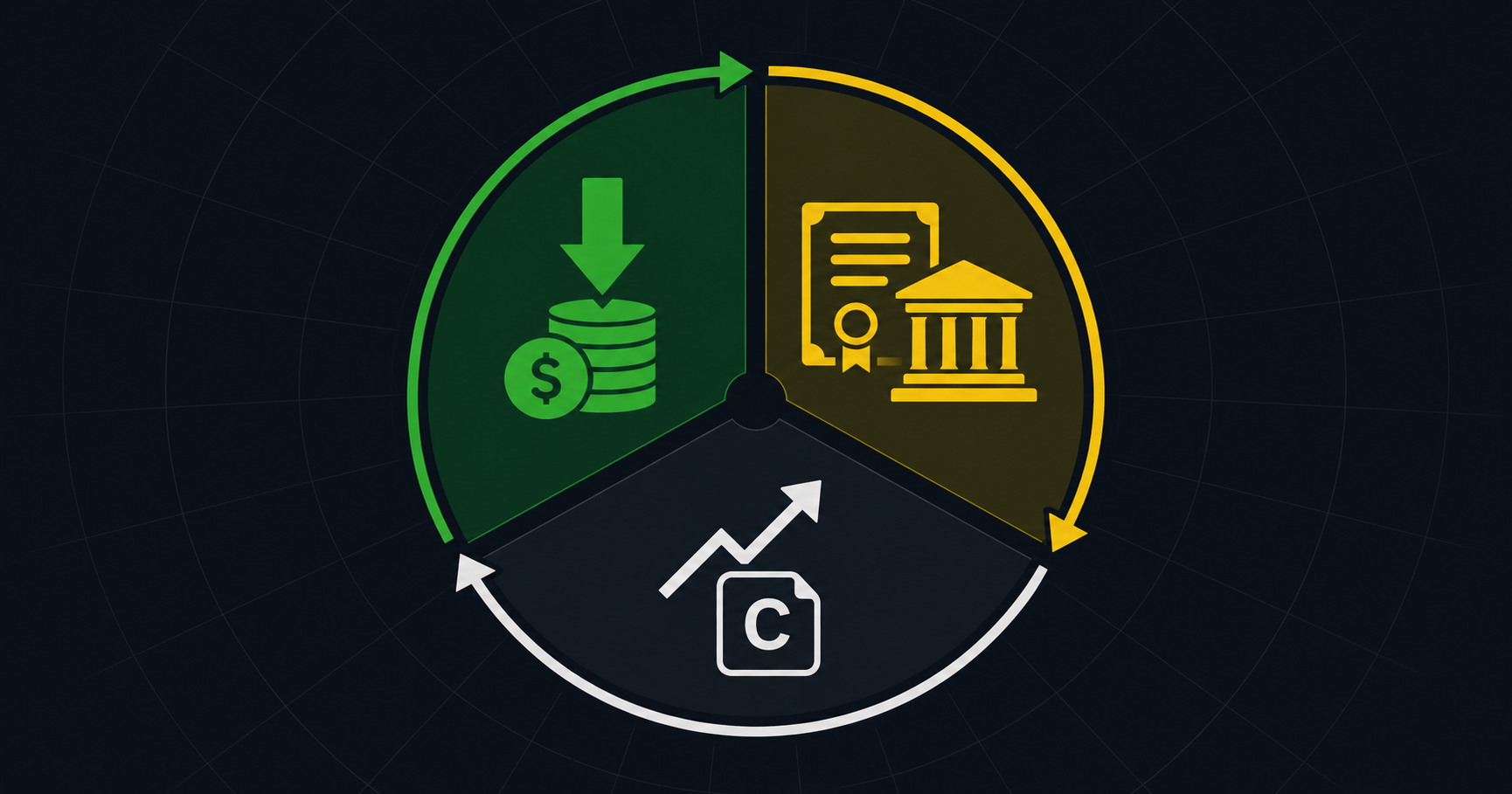
The moment most options traders fear is the moment the wheel strategy is designed to welcome. Getting assigned on a put means the stock dropped below your strike. In most trading contexts, that sounds like a loss. In the wheel strategy, it's the second step of a plan you already made.
Assignment only feels like failure if you didn't want to own the stock in the first place. If you chose a quality company and sold a put below fair value, assignment is exactly what a value investor would want: 100 shares of a business you believe in, at a price below what it's worth.
TL;DR
- Plan for assignment before you sell the first put, not after the stock drops
- Only sell puts on stocks you genuinely want to own at the strike price
- When assigned, immediately shift your mindset from trader to business owner
- Sell covered calls at or above your assigned strike to recover cost basis
- Patience and discipline after assignment matter more than any single option trade
Assignment Is a Feature, Not a Bug
The wheel strategy has two modes. Mode one: you collect put premiums, the stock stays above your strike, and the put expires worthless. You win in the simplest way possible.
Mode two: the stock drops below your strike and you're assigned 100 shares. This is where most beginners panic. But if you designed the entry correctly, this isn't a surprise. This was always one of the two planned outcomes.
You chose a company worth owning. You sold the put at a strike below fair value. You set aside the cash specifically to buy those shares if needed. Assignment is just that purchase executing. The premium you collected already lowered your effective cost below the strike price.
The mental reframe is simple: the moment you're assigned, you stop being an options trader on that position and start being a business owner. You own 100 shares of a company you analyzed, valued, and chose deliberately. What would a disciplined owner do next? Generate income while holding a quality asset.
Know Your Numbers Before the Assignment Happens
A good assignment plan starts before expiration, not after. When you sell the put, you should already know:
Your effective cost basis. Strike price minus the premium collected. If you sold the $88 put for $1.40, your effective cost is $86.60 per share. That's what you paid for the business.
Your fair value estimate. You estimated intrinsic value before selling the put. That number hasn't changed just because the stock dropped. A stock trading at $82 when you estimated fair value at $110 is now an even better deal than it was.
Your target covered call strike. Once assigned, you'll transition to covered calls. Your target strike is at or above your effective cost basis. If you paid $86.60 per share, selling a call at $88 or higher keeps you on track for a break-even or profitable exit. Selling below $86.60 risks locking in a loss if the stock gets called away.
Your time horizon. The wheel isn't a weekly income machine. On a quality company, you might hold shares for weeks or months waiting for price to recover above your strike. That's fine if the business is solid. Plan to hold.
The Covered Call After Assignment
Once assigned, you own 100 shares. Immediately evaluate whether to sell a covered call, and if so, at what strike and expiration.
Your priority is protecting cost basis while generating income. That means targeting a call strike at or above your effective cost. If you paid $86.60 per share, a covered call at the $88 strike does two things: it generates premium income and, if exercised, sells your shares for $88, giving you a $1.40 per share gain plus the call premium.
Choose a short to moderate expiration, typically 21 to 35 days out. Shorter expirations give you flexibility to adjust if the stock moves significantly. Longer expirations generate more total premium but commit you to a price for a longer window.
The 20-delta call is a reasonable target for the covered call, the same way the 20-delta put was your target on entry. At 20 delta, you have roughly an 80% chance of keeping your shares and collecting the full premium. That keeps the wheel spinning without giving up your shares prematurely.
A Real Assignment Example
You sell a 30-day $90 put on a technology services company currently trading at $96. Your intrinsic value estimate is $115. You collect $1.60 in premium. Your effective cost if assigned is $88.40 per share.
At expiration, the stock is at $87. You're assigned 100 shares at $90. Effective cost: $88.40.
You're not happy about the short-term paper loss. But the business hasn't changed. Revenue is growing, margins are stable, the moat is intact. Fair value is still $115. You own a $115 company for $88.40. That's a 23% discount.
You sell a 30-day covered call at the $90 strike for $1.20. Two outcomes:
If the stock climbs above $90 and your shares are called away, you sell at $90 plus the $1.20 call premium. Your net proceeds per share are $91.20. Against your $88.40 cost, that's a $2.80 per share gain in one month, a 3.2% return over your full capital commitment.
If the stock stays below $90 and the call expires worthless, you keep the $1.20 and sell another call. You've lowered your effective cost to $87.20. Repeat the cycle each month. After four months of $1.20 premiums, your cost basis is $83.60. The stock just needs to reach $83.60 for you to break even, and any recovery above that is profit.
This is the wheel working exactly as designed. Patient, disciplined, logical.
You can track your cost basis and fair value side-by-side quickly with Wall St Yardie so you always know your real margin of safety as you sell each covered call.
When the Stock Drops Further After Assignment
This is the hardest test of wheel discipline. You got assigned at $90 with an effective cost of $88.40. Instead of recovering, the stock falls to $78. The $90 covered call is now worth almost nothing. Premium at the $88 strike is thin. Selling below your cost basis risks locking in a loss if the stock recovers.
Here's how to think through it. First, recheck the business. Has anything fundamental changed? Has revenue declined, guidance been cut, or the investment thesis broken? If yes, the game has changed. If no, the price drop is noise and patience is your strategy.
If fundamentals are intact, focus on generating income without digging yourself into a deeper hole. Target a covered call strike of at least 10% below your effective cost but not so low that a quick recovery would call your shares away at a loss. If your effective cost is $88.40 and the stock is at $78, a $83 call captures some premium while leaving room for recovery.
Watch for the stock approaching your strike. If the stock climbs back toward $83 and you're not yet at your break-even, consider rolling the call up and out. Buying back the $83 call and selling a $86 call two weeks later costs a small debit but gives you more upside protection and time. The goal is always to exit the position at or above your effective cost.
What Could Go Wrong?
You sell a covered call below your effective cost basis. The stock drops hard and you chase premium by selling calls below what you paid per share. The stock recovers quickly and your shares get called away at a loss.
Mitigation: always know your effective cost before selling a covered call. If you must sell below cost for income, have a clear plan to roll up and out before expiration if the stock moves against you.
The business deteriorates after assignment. What looked like a temporary dip turns into structural decline. Revenue drops, fair value falls, and now your $88.40 cost basis is above intrinsic value.
Mitigation: revisit fundamentals after assignment, especially after earnings. If the investment thesis breaks, exit the position even at a loss. A sunk cost isn't a reason to keep holding. Read how to identify value traps for the warning signs.
You panic and sell the stock at a loss. The stock is at $78, your cost is $88.40, and the paper loss feels unbearable. You sell to stop the bleeding. One week later, the stock rallies to $94 on solid earnings.
Mitigation: if you did the valuation work correctly before selling the put, a temporary price drop is not a reason to exit. Reconfirm the business is sound. Confirm fair value still supports your entry price. Then hold, sell calls, and let the wheel do its job.
You get assigned on multiple positions at once. A market correction triggers assignment on four different wheel positions. You're suddenly fully invested with no dry powder.
Mitigation: stagger expirations and limit total capital in active wheel positions. Never run so many simultaneous wheel trades that a broad market pullback depletes all your cash. Keeping 30% to 40% of your portfolio in unencumbered capital is a good discipline.
Next Steps
- Before selling any put, write down your effective cost if assigned, your fair value estimate, and your target covered call strike
- When assigned, confirm fundamentals before deciding on the covered call approach
- Target covered calls at or above your effective cost basis to protect against loss on exit
- Use the 20-delta call in the 21 to 35 day window for a balance of income and flexibility
- If the stock drops post-assignment, focus on rolling covered calls up and out rather than locking in losses
- Read selling covered calls after assignment for advanced covered call management
- Read choosing stocks for the wheel to make sure you only get assigned on businesses worth owning
*Disclaimer: This content is for educational purposes only and does not constitute financial advice. Past performance does not guarantee future results. Always conduct your own research before investing.*