
Drawdowns and Capital Preservation
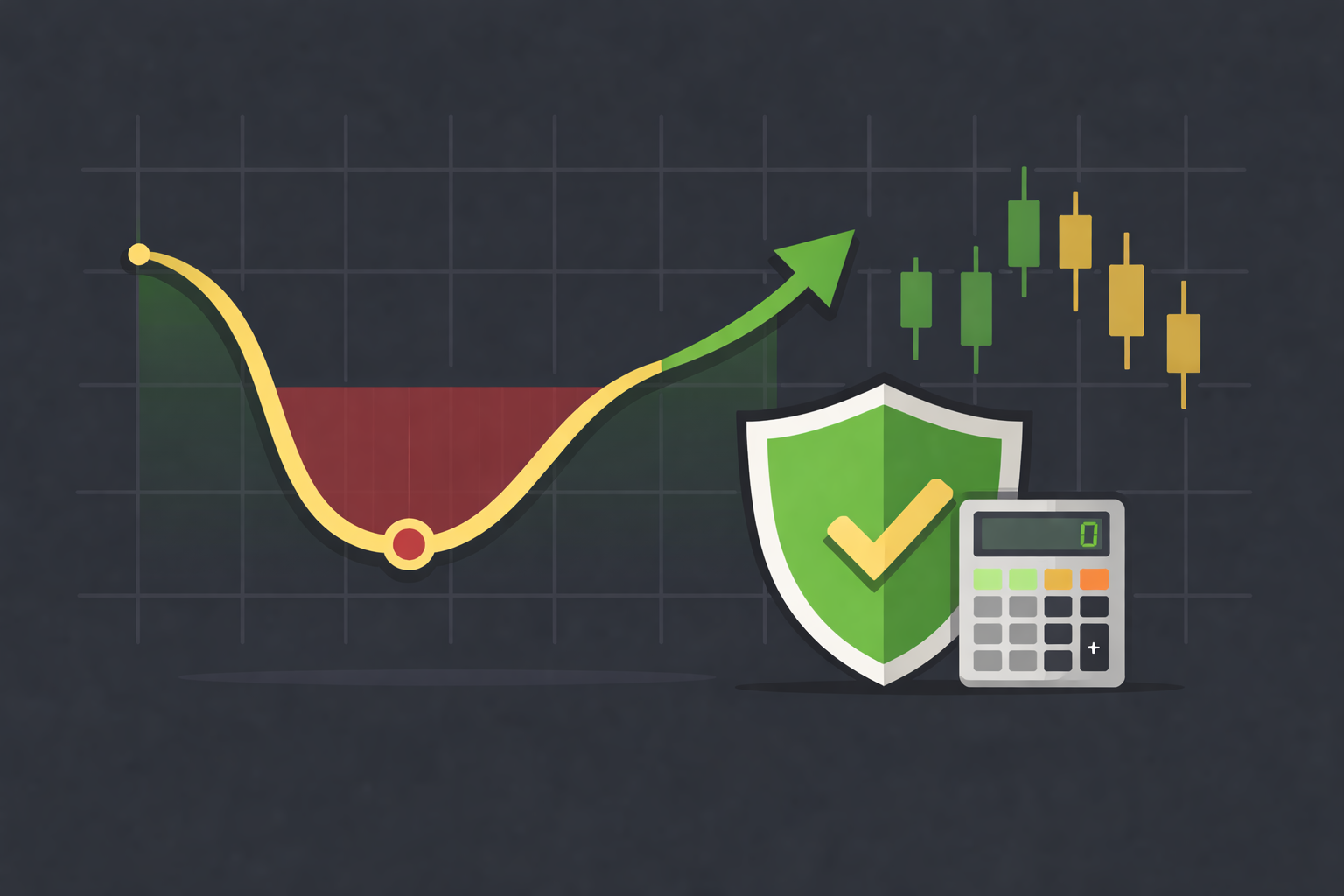
A smooth equity curve is every investor’s dream, but most people only learn about pain after they feel it. Drawdowns are the tuition the market charges when position sizing, valuation discipline, or hedging plans are loose. The faster you quantify them, the faster you can protect the cash you already earned and avoid turning a small dip into a wipeout.
TL;DR
- Measure losses the right way: Track peak-to-trough drawdowns, not just daily P&L swings.
- Size for survival: Keep risk per trade small enough that a losing streak doesn’t cripple you.
- Plan recovery math: A 20% drop needs a 25% gain to break even; design strategies that avoid big holes.
- Layer protection: Use valuation anchors, conservative strikes, and protective puts to cap downside.
- Review after every slide: Turn each drawdown into updated rules for position size, timing, and hedges.
Why Drawdowns Matter More Than Wins
Returns compound only when capital stays intact. A $100,000 account that drops 20% to $80,000 needs a 25% gain just to get back to even. A 40% hit requires 67% to recover. Those gaps widen because you’re compounding off a smaller base. Options magnify this reality: premium decay helps when you’re selling, but assignment risk or leverage can deepen losses if the underlying falls hard.
Value investors already think in margins of safety. Adding options should widen that buffer, not narrow it. By measuring drawdowns in tests and live trades, you see whether your strikes, expirations, and hedges actually reduce pain or simply add moving parts. If a strategy routinely produces 15–20% dips during rough markets, it may not fit your sleep schedule or capital plan.
The Three Ingredients of a Smaller Drawdown
- Valuation-first entries: Start with businesses you’d happily own. Cheap cash flows and solid moats cushion volatility. Use the Wall St Yardie app to sanity-check intrinsic value before setting strikes or spreads.
- Position sizing that assumes losing streaks: Cap risk per trade—1–2% of the portfolio for single-stock overlays, less for higher-IV names. Ten small losses hurt less than two oversized ones.
- Defined exits and hedges: Protective puts, rolling rules, and time-based exits keep losses from drifting. If you sell cash-secured puts, consider buying a lower-strike put when IV spikes to bracket risk.
Example: When a Mild Dip Turns into a Setback
You sell a cash-secured put on a stock you value at $50, collecting $2 at a $45 strike. The stock falls to $40 after earnings. You’re down $3 per share net ($45 assignment minus $2 premium minus $40 current price). On a 200-share position, that’s a $600 loss. If this is 3% of your portfolio, you need a 3.1% gain elsewhere to offset it. If it was 10% of your portfolio, you now need an 11% gain just to recover. The drawdown risk scales with size, not just with strike distance.
Testing Drawdowns Before Real Money
- Backtest with drawdown metrics: Track max drawdown and recovery time in your test logs, not just win rate. Pair results with valuation-driven tickers you’d own to avoid garbage-in, garbage-out data. See how often rolling reduces pain compared to letting contracts expire.
- Paper trade volatility spikes: Simulate selling premium when implied volatility jumps. Record how quickly drawdowns appear if the underlying keeps sliding, and how protective puts or staggered expirations change the curve.
- Stress-test sequences, not single trades: Model five to ten trades in a row where the underlying drifts down 10%. Does your plan survive? Do you stop after three losses? This matters more than any single “perfect” setup.
- Review against live benchmarks: Compare your test drawdowns to how you actually handled them in live trades. Tighten rules if real-world slippage or emotions made losses larger than the model.
Aligning Drawdowns with Goals
Your acceptable drawdown depends on what you’re solving for. If you need steady cash flow, prioritize low-volatility names, farther-out strikes, and smaller size, even if premiums are lower. If you’re optimizing for growth, accept slightly wider drawdowns but pair them with explicit hedges and a rule to pause when losses hit a preset level.
Internal benchmarks help: If your plan expects a max 10% drawdown, but a strategy shows 15% in testing, either reduce size or drop it. If a strategy shows shallow drawdowns but requires constant monitoring, decide if the time cost fits your lifestyle.
What Could Go Wrong?
- Anchoring to old peaks: You may refuse to cut size because “it bounced last time.” Mitigation: predefine stop-loss or roll rules in your playbook and follow them after two consecutive losses.
- Over-hedging drag: Buying too many protective puts can turn small drawdowns into guaranteed slow leaks. Mitigation: size hedges to risk tiers and use them during IV spikes, not constantly.
- Ignoring correlation: Selling puts on three tech names can stack the same macro risk. Mitigation: stagger sectors and expirations, and cap total exposure per theme.
- False confidence from short histories: A six-month backtest in a calm market hides real drawdown risk. Mitigation: test across bull, bear, and sideways periods, and pressure-test with 2008/2020-style drops.
Next Steps
- Add max drawdown and recovery time to your testing template before your next batch of trades.
- Re-size positions so a five-trade losing streak stays within your planned risk tier.
- Run a paper-test scenario with protective puts during a volatility spike.
- Update your playbook with roll/exit rules that trigger after two losses in a row.
- Revisit valuation anchors in the Wall St Yardie app to confirm strikes align with intrinsic value.
Internal Links for Deeper Study
- Strengthen your test design with Backtesting Options Strategies.
- Turn data into rules with Risk-Adjusted Tracking.
*Disclaimer: This content is for educational purposes only and does not constitute financial advice. Past performance does not guarantee future results. Always conduct your own research before investing.*