
Backtesting Options Strategies
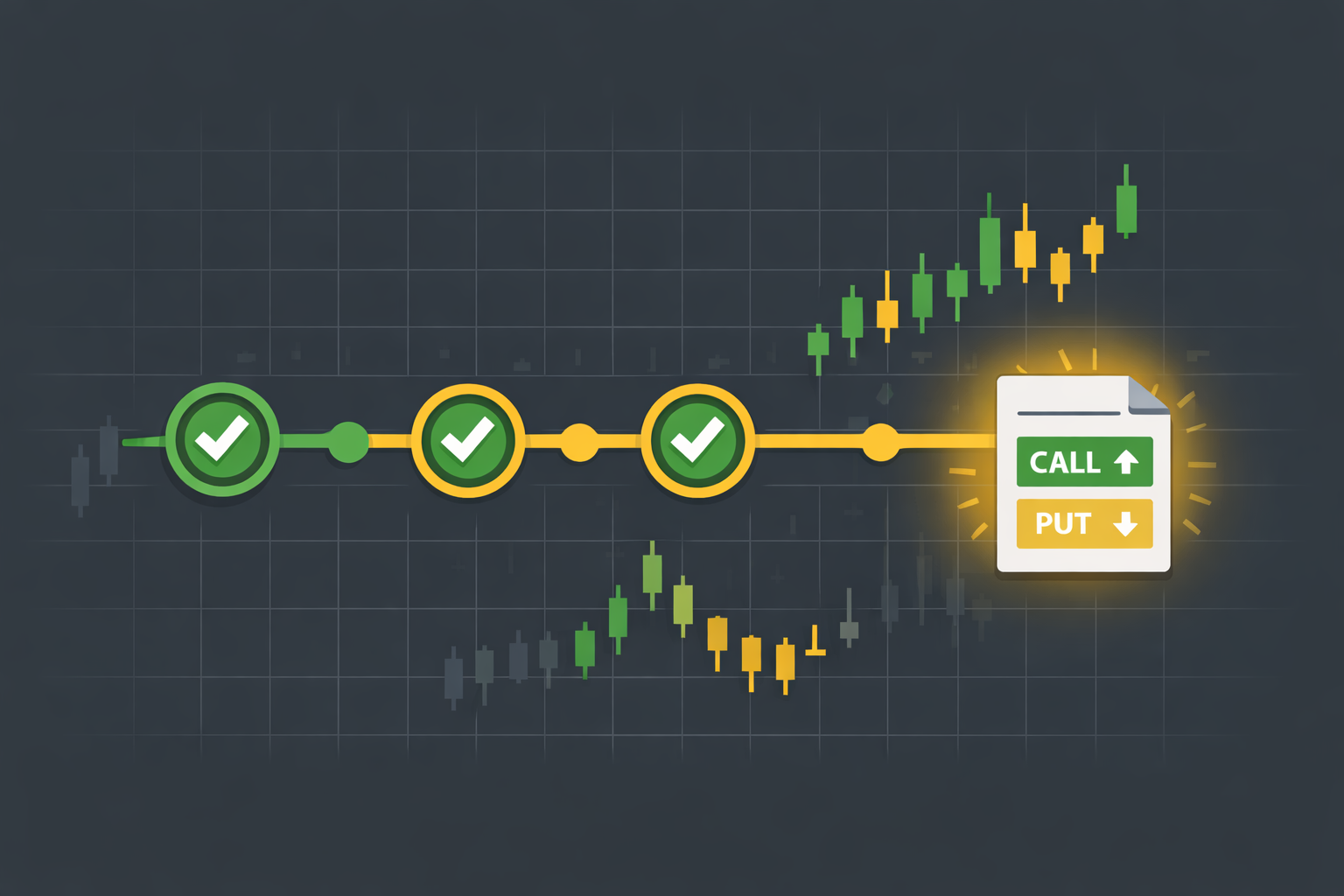
Backtesting shows you how a strategy behaves before you put capital at risk. It reveals whether your rules survive different markets, how often assignment happens, and whether the premium collected actually beats simply owning the stock. Done right, backtesting keeps you from overfitting to last month’s rally and grounds your decisions in data instead of hunches.
TL;DR
- History as rehearsal: Use past data to see how your rules handle bull, bear, and sideways markets.
- Stay simple: Test a few clear rules—strike distance, expiration length, position size—before adding complexity.
- Quality first: Run tests on companies you’d actually own, anchored to intrinsic value.
- Beware overfitting: Don’t tweak rules until the graph looks perfect; aim for robust, not shiny.
- Turn results into rules: Document findings and codify them in your playbook.
Why Backtest?
Value investors rely on fundamentals, but options add timing, strike, and volatility decisions. Backtesting lets you replay those decisions across years of price, IV, and earnings cycles. You see whether cash-secured puts at your buy price outperform limit orders, or if covered calls at fair value truly reduce drawdowns.
Backtesting also teaches humility. A rule that shines in 2021 can stumble in 2022. By running the same rule through multiple regimes, you learn whether it’s durable enough to deserve real money.
Setting Up a Clean Test
- Start with valuation anchors: Use fair value and margin-of-safety ranges from the Wall St Yardie app. Set strikes relative to those numbers, not just current price.
- Pick one variable at a time: For example, test 30-day vs. 45-day expirations while keeping strike distance constant.
- Use liquid tickers: Backtests on illiquid names produce misleading fills. Focus on quality businesses with active options chains.
- Include costs: Add commissions, expected slippage, and potential borrow fees for short calls.
- Define metrics: Premium collected, assignment rate, max drawdown, and return vs. holding stock.
- Refresh pricing basics: Revisit
/blog/options-basics-for-value-investors/options-basics-options-pricingso your assumptions on intrinsic and extrinsic value stay realistic during the test.
Numeric Example
Hypothesis: Selling 45-day cash-secured puts at buy-price strikes produces better entries than limit orders alone.
- Parameters: $60 strike on a stock you value at $80 with a $60 buy zone. Premium averaged $1.80 across 24 months of data. Roll any contract that is 30% in-the-money with 10 days left.
- Results: 35 trades, 11 assignments. Effective entry on assigned trades averaged $58.20. Non-assigned trades delivered a 3% average return per contract period on reserved cash. Max drawdown during a bear stretch: 9% vs. 14% for simply holding the stock.
- Takeaway: The rule lowered entry price and reduced drawdown, but required holding $6,000 cash per contract. That cash drag must be part of your plan.
Avoiding Overfitting
- Keep rules general: “Sell puts at buy price with 30–60 day expirations” is durable. “Sell $59 strikes on Tuesdays when IV rank is 47” is curve-fit nonsense.
- Test across regimes: Include pre- and post-earnings cycles, high- and low-IV periods, and at least one correction.
- Validate forward: After finding a rule, paper trade it live for a month to confirm results hold outside the backtest.
- Prefer simplicity: If two rules perform similarly, choose the simpler one. It’s easier to execute and less likely to break.
Interpreting Your Metrics
- Premium vs. drawdown: A high premium strategy that produces deeper drawdowns may not suit your temperament. Favor smoother equity curves over max yield.
- Assignment rate: If you’re constantly assigned above your buy price, your strikes are too aggressive. Shift closer to the value you calculated in the Wall St Yardie app.
- Time in trades: If rolls stack up, the rule might be too management-heavy. Consider longer expirations or wider strikes.
- Benchmark comparison: Compare results to simply buying the stock or holding cash. If the option overlay doesn’t improve risk-adjusted returns, rewrite the rule.
Bridge to Live Trading
Backtesting is a map; paper trading is a short walk; micro-sized live trades are the real hike. After a successful backtest:
- Paper trade for a month to confirm fills and workflows in current conditions.
- Trade one-contract size for another month, tracking emotions alongside numbers.
- Scale gradually only if the live results rhyme with the backtest and your journal shows consistent rule-following.
This bridge keeps you from overreacting to a single bad fill or a lucky win. You’ll know whether the strategy works for both your portfolio and your personality.
Tools and Data Sources
- Broker backtesting modules: Many platforms offer simple historical testing; pair them with your valuation notes.
- Spreadsheets: Track strikes, expirations, and premiums manually to understand the mechanics. Templates help you stay consistent.
- Dedicated tools: Use tools that support option Greeks and IV history, but feed them with your fair value inputs so strikes stay aligned with
/blog/fundamentals-of-value-investing/fundamentals-valuation-framework.
What Could Go Wrong?
- Garbage in, garbage out: Bad data or unrealistic fill assumptions distort results. Mitigation: sanity-check fills against historical bid-ask ranges.
- Ignoring fundamentals: Backtests on weak businesses look good until reality hits. Mitigation: limit tests to companies you’d own and keep valuation central.
- Overfitting: Tweaking until the curve is perfect kills robustness. Mitigation: lock rules after two or three iterations and validate forward.
- Execution gaps: A rule that looks good on paper may be hard to manage in real time. Mitigation: simulate alerts, rolls, and assignment handling during the test.
- Cash drag: Keeping collateral idle lowers overall returns. Mitigation: include opportunity cost when judging results.
Next Steps
- Define one clear hypothesis (e.g., “45-day puts at buy price vs. limit orders”) and the metrics you’ll judge.
- Gather data on 2–3 quality stocks with liquid options and known intrinsic value ranges.
- Run the backtest with realistic fills, costs, and rules for rolls or exits.
- Paper trade the winning rule for a month to validate forward.
- Add the confirmed rule to your playbook and update your checklist before sizing up.
*Disclaimer: This content is for educational purposes only and does not constitute financial advice. Past performance does not guarantee future results. Always conduct your own research before investing.*