
Historical Lessons in Risk Management
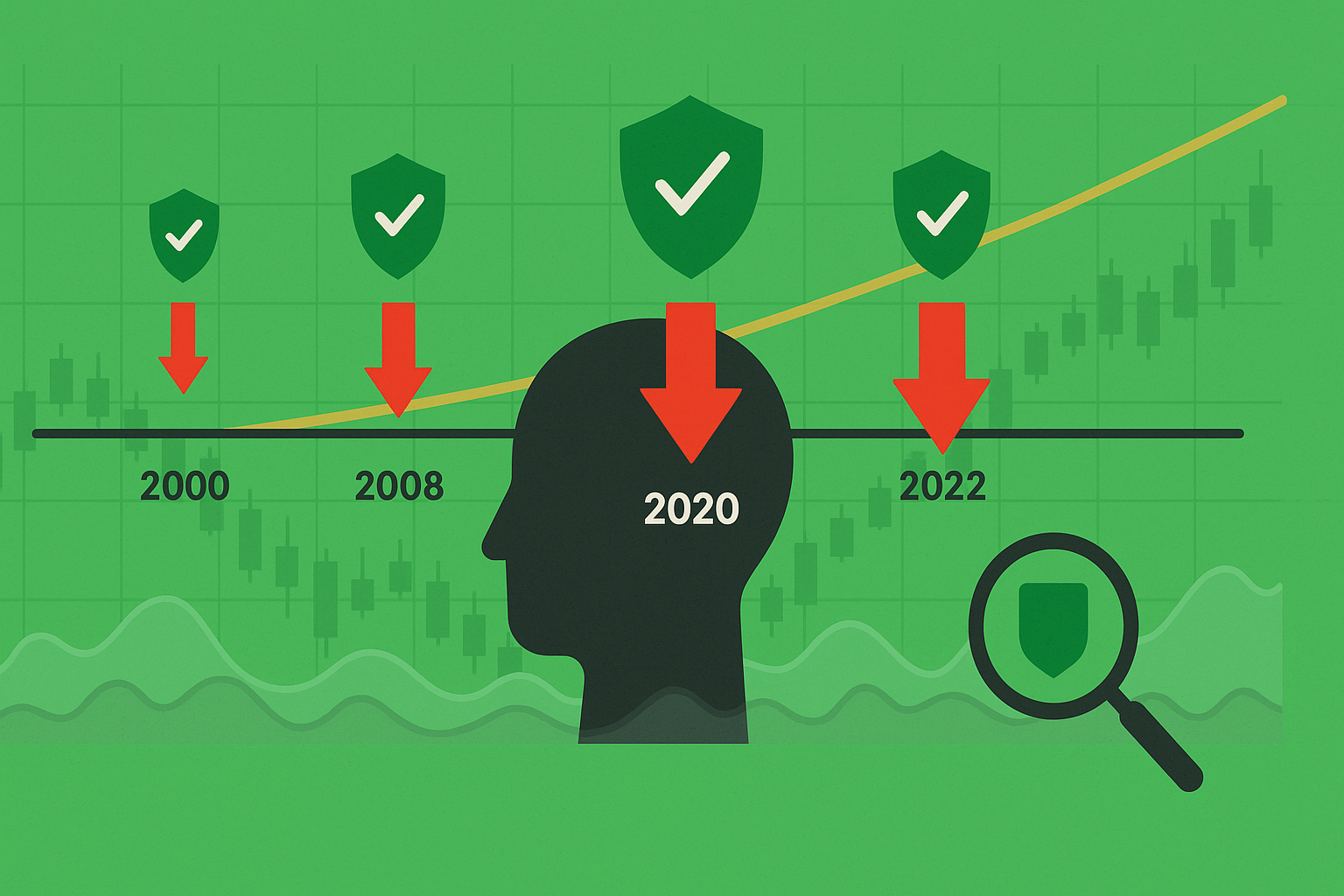
Every market crash teaches the same lesson: unhedged positions hurt twice, once in the drawdown and again in the psychological damage that forces bad decisions. Investors who used protective puts during 2008, 2020, or 2022 didn't just preserve capital, they stayed calm enough to buy when others panicked. History doesn't repeat, but risk management principles do.
TL;DR
- 2008 Financial Crisis: protective puts saved portfolios from 50% drawdowns, keeping investors solvent and ready to buy at the bottom
- 2020 COVID Crash: covered calls generated income during the sideways recovery, while puts protected against the 30% one-month drop
- 2022 Bear Market: rolling puts and defensive positioning limited losses when growth stocks fell 60-80%
- Dotcom Bubble (2000-2002): investors who hedged overvalued tech held onto quality value stocks instead of panic-selling everything
- Common pattern: every crisis rewards patience, capital preservation, and the discipline to act when valuations scream "buy"
2008 Financial Crisis: The Value of Protection
The 2008 crash dropped the S&P 500 by 57% from peak to trough (October 2007 to March 2009). Most investors lost 40-60% of their portfolios. But those who used protective puts or maintained cash to buy puts during the decline came out ahead.
Example: Hedging a diversified portfolio
Let's say an investor held a $100,000 portfolio in October 2007. Without hedging, by March 2009 it was worth $50,000 (50% loss). Recovery to break-even took until March 2013, nearly 5.5 years of flat returns.
Now consider the same investor who spent 2% annually on protective puts (about $2,000 per year). During the crash, those puts paid out roughly $20,000-30,000 (depending on strike selection and timing). The portfolio dropped to $70,000 in stock value, but the put gains brought the total to $90,000-100,000.
More importantly, this investor had cash from expired puts and the confidence to buy stocks in March 2009 when the S&P hit 666. By 2013, their portfolio was worth $150,000-180,000, while the unhedged investor was just breaking even.
The lesson: protection isn't about avoiding all losses. It's about staying in the game psychologically and financially so you can act when opportunity appears. The hedged investor recovered faster because they didn't panic-sell at the bottom.
2020 COVID Crash: Speed and Volatility
The COVID crash was different: the S&P 500 fell 34% in just 33 days (February 19 to March 23, 2020), then recovered to new highs by August. The speed created two opportunities for options users:
Protective puts in February-March: Investors who sensed trouble (rising case counts, travel bans, earnings warnings) bought puts in late February. A $95 put on SPY (when it traded at $320) cost about $8. By March 23, SPY hit $218, and the put was worth $100+. That $8 bet returned 12x, offsetting 30% of portfolio losses.
Covered calls in April-August: After the crash, stocks traded sideways for weeks as investors debated recovery timelines. Covered call sellers collected 2-4% monthly premiums on quality stocks like "Apple," "Microsoft," and "Johnson & Johnson." Over 5 months, that's 10-20% in extra income, added to the stock's 30-50% recovery gains.
The lesson: volatility creates two phases. In the crash, protection pays. In the recovery, income strategies thrive. Investors who rotated from puts to covered calls captured both.
2022 Bear Market: The Grind Lower
Unlike 2008 or 2020, the 2022 bear market was a slow grind. The S&P 500 fell 25% over 10 months (January to October), with multiple failed rallies. Growth stocks fell harder: "Tesla" dropped 60%, "Meta" fell 70%, and speculative names lost 80-90%.
Rolling protective puts: Investors who bought 3-6 month puts in January and rolled them every quarter stayed protected through multiple down legs. A $400 put on SPY in January cost $15. When it expired in April (SPY at $380), they rolled to a July $360 put for $12. That put was worth $30 by June (SPY hit $365).
The cost? About $30-40 per quarter in premiums. The benefit? Avoiding a 25% portfolio loss ($25,000 on a $100,000 portfolio). Net savings: $20,000+ after hedging costs.
The lesson: extended bear markets favor active hedging. You can't buy one put and forget it. Rolling strategies and adjusting strikes as the market declines keeps protection effective without overpaying.
Dotcom Bubble (2000-2002): Valuation Discipline
The Dotcom crash was a lesson in valuation, not just hedging. The Nasdaq fell 78% from peak (March 2000) to trough (October 2002). Tech stocks trading at 50-100x sales went to zero. But quality value stocks like "Berkshire Hathaway," "Coca-Cola," and "Walmart" held up or even rose.
Hedging overvalued holdings: Investors who recognized the bubble in 1999 faced a dilemma: sell everything and risk missing the final run-up, or hold and risk catastrophic losses. Protective puts offered a middle path.
An investor holding "Cisco" at $80 in March 2000 (150x earnings) could have bought a $60 put for $5. By October 2002, "Cisco" traded at $10. The put saved $50 per share, turning a 87% loss into a 37% loss (plus the $5 premium cost).
Meanwhile, they could have rotated into undervalued stocks like "Berkshire" (trading at $70,000 per A-share in 2000, worth $350,000 by 2010). The put preserved capital for redeployment into better opportunities.
The lesson: hedging buys time. When valuations are extreme but momentum is strong, puts let you ride the trend while protecting against inevitable mean reversion. Then you redeploy into undervalued assets when the dust settles.
Common Patterns Across Crises
Every crash reveals three risk management truths:
Hedging costs less than panic-selling: a 2-3% annual hedge preserves 20-30% of capital during crashes. That's a 10x return on the premium paid. More importantly, it prevents the emotional decision to sell at the bottom, which locks in permanent losses.
Cash is optionality: investors who held 10-20% cash (or generated it from expired puts) bought stocks at once-in-a-decade valuations. The 2009 and 2020 bottoms rewarded those with dry powder. Hedging creates that cash when it's most valuable.
Income strategies work in recovery: after the panic, markets trade sideways or grind higher. Covered calls and cash-secured puts generate 10-20% annual yields during these periods, accelerating recovery and compounding.
Quality stocks + hedging = resilience: during 2008, "Coca-Cola" fell 30% while the S&P fell 50%. During 2022, "Procter & Gamble" fell 10% while the Nasdaq fell 35%. Owning wonderful companies plus hedging reduces drawdowns to tolerable levels (10-20% vs. 50-60%).
What Could Go Wrong?
Over-hedging destroys returns: if you spend 5-10% annually on puts and no crash happens for a decade, you've given up 50-100% of potential gains. Hedging is for tail risk, not everyday volatility.
Mitigation: hedge selectively. Only buy puts when valuations are extreme, you hold concentrated positions, or macro uncertainty is high. Don't hedge 100% of your portfolio 100% of the time.
Buying puts too late: waiting until the market falls 10-15% to buy protection means premiums are expensive (high implied volatility) and the damage is already done.
Mitigation: establish hedges when markets are calm and puts are cheap. A $380 SPY put costs $10 when SPY is at $400 (2.5% premium). It costs $30 when SPY is at $380 (7.9% premium). Early hedging is cheaper.
Failing to act on opportunities: you preserve capital with puts but then sit in cash during the recovery, missing the bounce. The 2009 bottom to 2010 peak was a 80% gain. The 2020 bottom to year-end was 70%.
Mitigation: hedging is step one. Step two is redeploying cash into undervalued stocks when the crash happens. Build a watchlist of wonderful companies you'd buy at 30-50% discounts.
Confusing hedging with market timing: protective puts don't predict crashes. They protect against them. You might hedge in 2019 (no crash), 2020 (crash happens), 2021 (no crash), 2022 (crash happens). The cost in "wasted" premiums (2019, 2021) is less than the benefit during actual crashes.
Mitigation: treat hedging as insurance, not speculation. You pay premiums whether or not your house burns down. Same with puts.
Next Steps
- Study past portfolios: look at your 2008, 2020, or 2022 holdings. Calculate how much a 2-3% annual hedge would have saved vs. riding out the full drawdown
- Build a crisis playbook: write down which stocks you'd buy if the market fell 20-30%. Set price targets (e.g., "buy Apple at $120") so you act mechanically when fear peaks
- Start small with hedging: allocate 1-2% of your portfolio to protective puts on your largest or most volatile holdings. See how it feels during a 5-10% correction
- Track the cost: log every put premium you pay. After 2-3 years, evaluate whether the peace of mind and capital preservation justify the expense
- Read Protective Puts for Downside Insurance for mechanics on structuring hedges
- Explore Building a Risk Management Plan to integrate historical lessons into your strategy
*Disclaimer: This content is for educational purposes only and does not constitute financial advice. Past performance does not guarantee future results. Always conduct your own research before investing.*