
Cost Efficiency of LEAPS
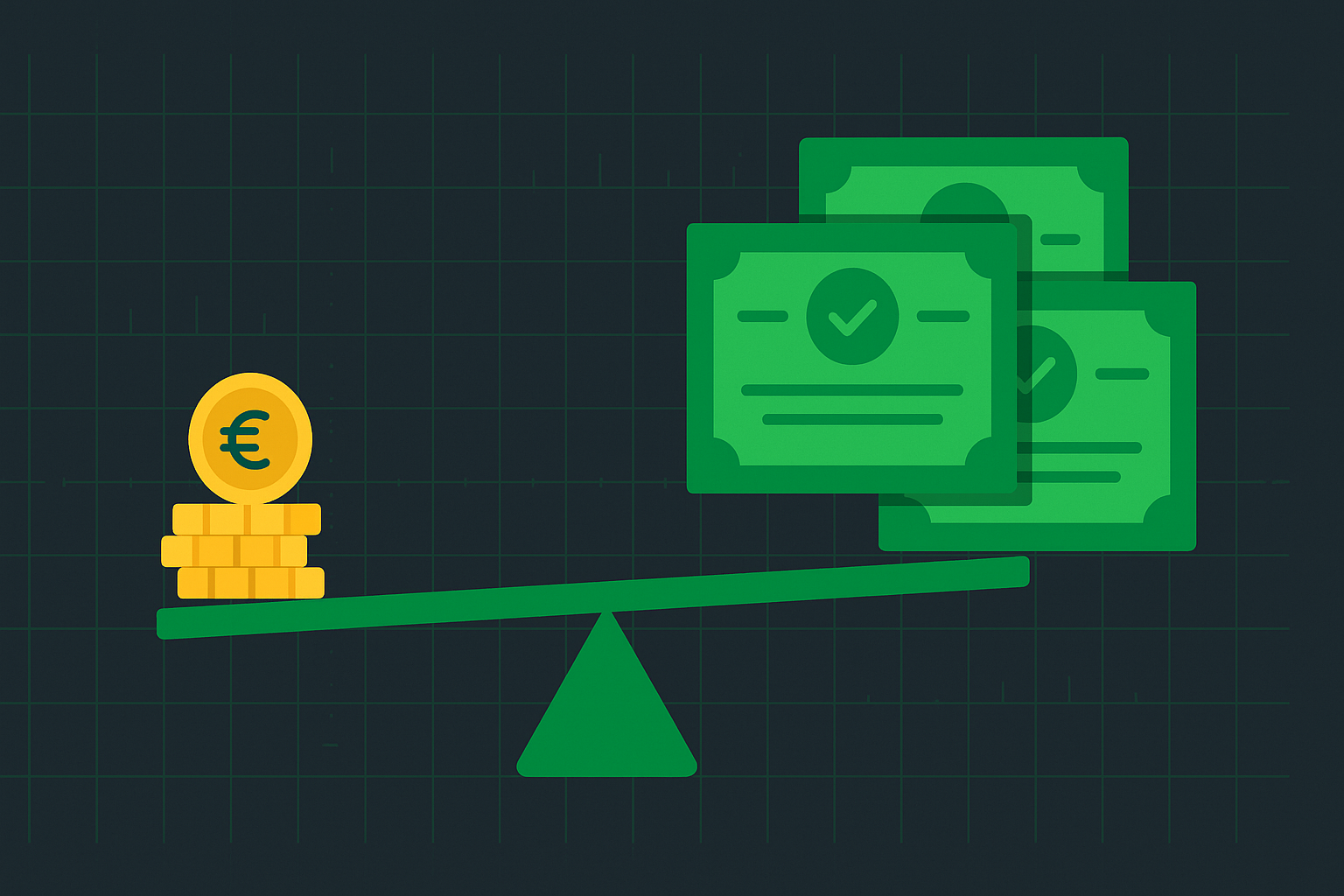
Two investors both want exposure to a $100 stock they believe is worth $150. One buys 100 shares for $10,000. The other spends $2,500 on a long-dated call option and controls the same upside. Same conviction, same thesis, wildly different capital commitment. That's the power of LEAPS.
TL;DR
- Control more with less: LEAPS let you replicate stock ownership at 20-40% of the full stock price
- Free up capital: Deploy savings into other opportunities while maintaining full position exposure
- Leverage without margin: Enjoy amplified returns without the interest payments or margin call risk
- Best for high conviction: Use cost efficiency to concentrate on your strongest ideas while preserving cash
- Not free money: Time decay and premiums cost real money, so choose quality companies only
What Makes LEAPS Cost Efficient
When you buy stock, you pay the full price upfront. A $100 stock costs you $10,000 for 100 shares. That capital sits locked in one position until you sell.
LEAPS work differently. You pay a fraction of that, typically 20-40% of the stock price, to control the same 100 shares for one to two years. A $100 stock might have a LEAPS contract trading for $25 per share, meaning you spend $2,500 instead of $10,000 for equivalent exposure.
That's a 75% reduction in capital outlay for the same potential gain. The savings aren't theoretical, they're cash you can deploy elsewhere or hold as dry powder for better opportunities.
Here's the math: if the stock rises from $100 to $150, both the shareholder and the LEAPS holder capture that $50 gain (minus the option premium). But the LEAPS holder only committed $2,500 instead of $10,000. Same profit on far less capital.
Where the Savings Come From
The cost efficiency of LEAPS comes from two sources: leverage and time value.
Leverage means you control 100 shares without owning all 100 shares. You're essentially borrowing the other 60-80% of the position from the market. Unlike margin debt, you don't pay interest. You pay upfront through the option premium.
Time value is what you're buying. The premium includes the probability that the stock will move in your favor over the contract's life. You're paying for opportunity, not ownership. Once you understand this, the cost structure makes sense.
The deeper in-the-money you go, the less time value you pay. A LEAPS with a $70 strike on a $100 stock will have $30 of intrinsic value (the stock's current price minus the strike) and maybe $10 of time value. You're paying mostly for what's already real, not just for hope.
Real World Example
Let's say you believe Company XYZ, trading at $100 per share, is worth at least $150 based on your discounted cash flow model. You have $10,000 to invest.
Option 1: Buy the stock
You buy 100 shares at $100 each. Your $10,000 is now fully committed.
Option 2: Buy a LEAPS call
You buy one LEAPS contract (100 shares) with a $70 strike, expiring in 18 months, for $32 per share. Total cost: $3,200.
If the stock rises to $150:
- Stock buyer gains $5,000 (50% return on $10,000)
- LEAPS buyer gains $4,800 (150% return on $3,200) — $80 option value minus $32 premium paid
The LEAPS holder captures nearly the same dollar gain with 68% less capital. Now they have $6,800 left over to deploy elsewhere or keep as cash for protection.
If the stock stays flat or drops slightly, the stock holder keeps full ownership. The LEAPS holder loses the time premium, but only risked $3,200 instead of $10,000. It's a trade-off, not a free lunch.
When Cost Efficiency Matters Most
Cost efficiency shines when you have high conviction in multiple undervalued companies but limited capital. Instead of buying two or three stocks at full price, you can take LEAPS positions in five or six, spreading your thesis across more opportunities without diluting your exposure.
It also helps when you want to keep dry powder. Markets don't move in straight lines. By using LEAPS on your existing convictions, you free up cash to take advantage of sudden drops or new opportunities. You stay invested while staying flexible.
Value investors often talk about concentrated bets on their best ideas. LEAPS let you concentrate without going all-in. You can size positions for maximum upside while limiting downside to the premium paid. That's margin of safety in action.
For deeper reading on how to amplify returns, check out using LEAPS to amplify earnings yield.
What Could Go Wrong?
Time decay eats the premium:
Even if the stock goes up, you need it to rise enough to offset the time value you paid. A 10% stock gain might not cover your premium if the contract is near expiration.
Mitigation: Buy deep in-the-money LEAPS with mostly intrinsic value. These behave more like stock with less time decay drag.
Volatility crush after you buy:
If implied volatility drops after your purchase, the premium shrinks even if the stock price stays flat. You lose money from the volatility component alone.
Mitigation: Avoid buying LEAPS when volatility is spiked. Wait for calmer periods to get better pricing.
The stock takes longer than expected:
Your valuation might be correct, but if the stock takes three years to reach fair value and your LEAPS expire in 18 months, you miss out.
Mitigation: Match your option expiration to your expected timeline. If you think it'll take two years, buy a two-year LEAPS, not a one-year.
You overleverage:
The temptation to "control more for less" can lead you to buy too many contracts. If the thesis breaks, you lose faster and harder than with stock.
Mitigation: Treat each LEAPS contract as if you're buying the full stock position. Don't oversize just because it feels cheap.
The company deteriorates:
If fundamentals weaken, the stock and your LEAPS both fall. But unlike stock, your LEAPS has an expiration clock. You can't just hold and wait indefinitely.
Mitigation: Only use LEAPS on wonderful companies with durable competitive advantages. Don't try to trade turnarounds with long-dated options.
Next Steps
- Review your watchlist and identify companies where you have strong conviction but want to preserve capital
- Calculate the cost of a deep in-the-money LEAPS (at least 20% ITM) versus buying stock outright
- Compare the return scenarios: what happens if the stock rises 30%? Falls 10%? Stays flat?
- Only deploy LEAPS if the cost efficiency lets you diversify better or keep more dry powder for future opportunities
- Track your positions carefully. Cheat the math using Wall St Yardie to understand intrinsic value before committing capital.
For more on selecting the right stocks for LEAPS, see choosing the right stocks for LEAPS. To understand the risks more deeply, read risks of using LEAPS.
*Disclaimer: This content is for educational purposes only and does not constitute financial advice. Past performance does not guarantee future results. Always conduct your own research before investing.*