
Options Enforce Discipline
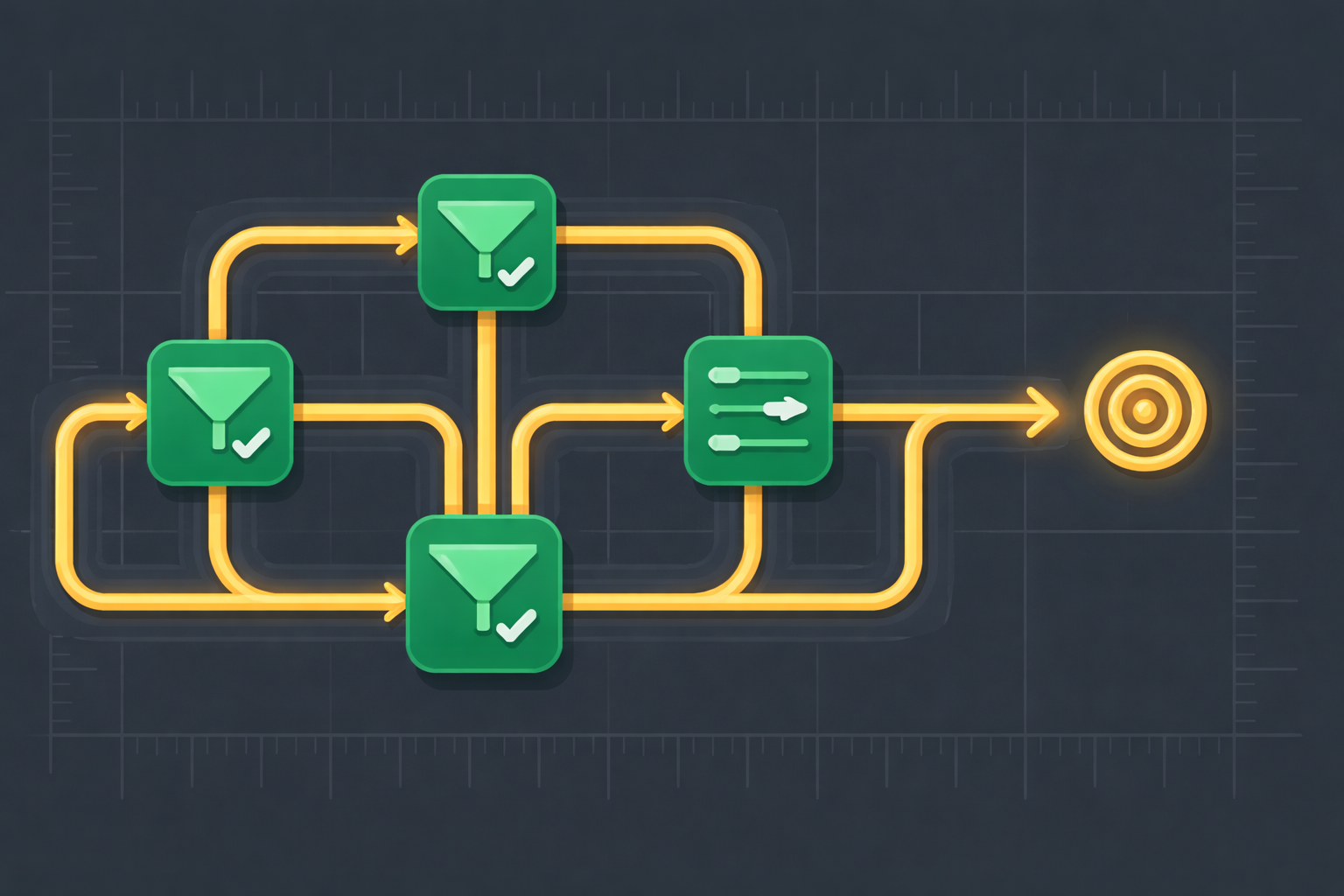
The hardest part of value investing isn't finding good companies, it's sticking to your plan. Emotions hijack logic. You sell too early during crashes, hold too long during rallies, and second-guess every decision. Options can't eliminate emotions, but they can create structure that forces discipline. Strikes act as price targets. Expirations force reviews. Premiums reward patience. The contracts themselves become guardrails for better decision-making.
TL;DR
- Strikes force valuation clarity: Picking a $95 put or $110 call requires you to answer: what is this stock worth?
- Expirations create review cycles: 30-60 day contracts force you to reassess every position monthly, preventing zombie holdings
- Premiums reward waiting: Collecting $3 per share for holding a stock or waiting to buy trains patience instead of chasing
- Assignment removes emotion: When shares get called away or put to you, the decision is made by the contract, not panic or greed
- Options punish overtrading: Frequent changes cost money (time decay, bid-ask spreads), naturally discouraging hyperactivity
The Discipline Problem in Stock Investing
Pure stock investing is emotionally chaotic. You buy "WonderfulCo" at $100, believing it's worth $130. The stock drops to $85. Should you sell (cut losses) or buy more (average down)? There's no forcing function. You're left agonizing over every decision.
Or it rallies to $125. Do you take profits or hold for $130? What if it keeps going to $150? Fear of missing out (FOMO) and fear of losing gains pull you in opposite directions. Most investors sell too early or too late, leaving money on the table or riding stocks back down.
Options solve this by imposing structure:
- Cash-secured puts: You decide upfront: "I'll buy at $90, not $100." The put enforces this. No panic buying at $100, no overthinking at $85.
- Covered calls: You decide: "I'll sell at $120, not $125 or $130." If the stock hits $120, it's called away. No second-guessing.
- Protective puts: You decide: "I'll limit losses to 10%." The put does the work, no stop-loss panic.
Each contract embeds a decision rule, replacing emotional reactions with pre-committed logic.
Strikes Force Valuation Discipline
When you sell a cash-secured put or covered call, you must choose a strike price. That choice forces you to answer: what is this stock actually worth?
Example: DurableCo trading at $100
If you believe intrinsic value is $120, you have a valuation anchor. Selling a $90 put makes sense (10% below current price, 25% below fair value). Selling a $110 call makes sense (10% above current, 8% below fair value).
But if you can't calculate intrinsic value, you're guessing. You might sell a $105 call because the premium looks juicy, then watch the stock hit $125 and realize you capped yourself 16% below fair value. Or you sell an $85 put, the stock drops to $75, and you're assigned 15% above where you'd have bought if you'd done the math.
The forcing function: Picking strikes requires valuation work upfront. This prevents lazy "buy whatever's popular" investing. You're not buying DurableCo because it's trending, you're buying it because $90 is a 25% discount to $120 intrinsic value. That clarity makes every decision easier.
Expirations Create Review Cycles
Buy-and-hold investors set it and forget it. They buy stocks, check prices quarterly (or never), and hope for the best. This leads to zombie portfolios: stocks held for years after the thesis broke, or undervalued stocks sold too early because no one revisited the valuation.
Options force reviews. If you sell a 30-day covered call, you're revisiting the position 12 times per year. If you sell a 60-day put, you're reassessing 6 times per year. Each expiration asks: do I still want to own this (or buy it)? Has the thesis changed?
Example: You sell a covered call on TechCo at $100 strike
Month 1: Stock at $95, call expires worthless. Review: earnings still strong, moat intact. Sell another call at $105.
Month 2: Stock at $110, called away. Review: it hit fair value, time to exit. Redeploy capital into better opportunities.
Without the call, you might've held TechCo at $110, hoping for $120, then ridden it back to $95. The expiration forced an exit near fair value, locking in gains.
Or:
Month 1: Stock at $95, call expires worthless. Review: earnings missed, management guidance weak. Don't sell another call. Sell the stock or buy a protective put.
The monthly review catches problems early. Pure stock investors often hold losers too long because there's no trigger to reassess.
Premiums Reward Patience
Value investing requires waiting. You wait for stocks to drop to fair value. You wait for earnings to compound. You wait for markets to recognize intrinsic value. Most investors struggle with this because waiting feels like doing nothing, and humans hate inaction.
Options turn waiting into income, making patience tangible and rewarding.
Cash-secured puts:
You want to buy QualityCo at $90, but it's at $100. Instead of placing a limit order (earning nothing while waiting), you sell a $90 put for $3 per share, collecting $300 per month.
After 6 months, you've collected $1,800 in premium. If the stock still hasn't dropped to $90, you've earned 18% on the $10,000 you'd have spent buying shares. If it does drop and you're assigned, your effective entry is $72 ($90 strike minus $18 in cumulative premiums). Either way, patience paid.
Covered calls:
You own SolidCo at $100, believing it's worth $120. You sell a $115 call for $4 per share, collecting $400 per month.
After 12 months, you've collected $4,800 in premium. If the stock hits $115 and gets called away, your total return is $15 capital gain + $48 premium = $63 per share (63% gain). If it never hits $115, you've earned 48% income over a year while waiting. The premiums make holding feel productive, not passive.
Key insight: Premiums are psychological training wheels. They condition you to wait because waiting pays. Over time, you internalize patience, even without options.
Assignment Removes Emotional Decisions
One of the hardest investing decisions is when to exit. You own a stock that's rallied 30%, do you sell now or hold for more? Or it's dropped 20%, do you cut losses or average down? Emotions cloud judgment.
Options remove this burden through assignment.
Covered calls:
You sell a $120 call on a stock you bought at $100. The stock hits $125, and shares are called away at $120. You made $20 per share (20% gain) plus the call premium (maybe $3-5). Total: 23-25% return.
Did you leave $5 per share on the table (stock at $125, you sold at $120)? Yes. But you made a 23-25% return on a position you bought below intrinsic value and exited near fair value. That's a win. The assignment made the decision for you, removing FOMO.
Cash-secured puts:
You sell a $90 put on a stock trading at $100. It drops to $85, and you're assigned at $90. You now own shares at $90 (minus the premium you collected, so maybe $87 effective entry).
The stock might drop to $80. That feels bad. But you committed to buying at $90 because you believed intrinsic value was $120. The assignment enforced your plan. You didn't panic-buy at $100 or chicken out at $85. You bought where you said you would.
Psychological benefit: Assignment externalizes the decision. You didn't sell at $120 because you got greedy or scared, the contract made you sell. You didn't buy at $90 because you panicked, the contract made you buy. This reduces regret and second-guessing.
Options Punish Overtrading
Discipline includes not trading too much. Hyperactive investors chase every move, generating commissions, taxes, and mistakes. Options naturally discourage this because overtrading is expensive.
Time decay (theta):
Every time you close and reopen an option, you pay time decay. If you sell a 30-day call, collect $2, then buy it back after 10 days for $1.50, you netted $0.50 but missed 20 days of decay. If you'd held, you'd have kept the full $2.
Bid-ask spreads:
Every option trade crosses the spread. On illiquid options, that's $0.10-0.30 per share. Trade 10 times, that's $1-3 per share lost to friction. Stock trades have spreads too, but they're smaller ($0.01-0.05).
Wash sales and taxes:
If you sell a stock at a loss, then buy it back within 30 days, the loss is disallowed (wash sale rule). Options trigger this too. Frequent trading creates tax headaches.
Natural brake: Because options cost money to trade frequently, they train you to hold positions longer and only adjust when conditions change materially (big price move, IV spike, thesis change). This aligns with value investing's long-term philosophy.
Structure Beats Willpower
Pure stock investing relies on willpower. You tell yourself: "I'll sell at $120, not $130." But when the stock hits $120, you hesitate. "Maybe $125?" Then it drops to $110, and you panic-sell.
Options replace willpower with contracts. You can't decide to hold past $120 if a $120 call is in place. The market forces the exit. This is good. Discipline isn't about being superhuman, it's about setting up systems that make good decisions automatic.
Pre-commitment devices:
Behavioral economists call this "Ulysses contracts" (Odysseus tying himself to the mast to resist sirens). Options are the mast. You tie yourself to a strike and expiration, removing the ability to make emotional mistakes later.
What Could Go Wrong?
Strikes too conservative: You sell a $90 put on a $100 stock, but intrinsic value is $150. If assigned, you bought 40% below fair value, but you could've bought at $85 or $80 if you'd waited. Mitigation: Only use options on stocks you'd happily own at the strike, regardless of where the price goes.
Expirations force bad exits: You sell a call at $120, the stock hits $125, and you're called away. Then it rallies to $150. You missed $30 per share. Mitigation: Only sell calls at or above intrinsic value. If fair value is $140, don't sell $120 calls.
Premiums tempt greed: High premiums on risky stocks lure you into bad trades. You sell a $50 put on a declining business because the premium is $5, then get assigned and the stock drops to $30. Mitigation: Never sell options on companies you wouldn't own long-term. Quality first, premium second.
Assignment at the wrong time: You're assigned on puts during a crash and run out of cash to buy more or average down. Mitigation: Don't sell puts with 100% of your capital. Keep 20-30% in reserve for averaging down or new opportunities.
Over-optimization paralysis: You spend hours tweaking strikes and expirations, trying to maximize every trade. This wastes time and leads to analysis paralysis. Mitigation: Use simple rules (sell puts 10% below, calls 10% above) and don't obsess over perfect strikes.
Next Steps
- Pick one stock in your portfolio and calculate intrinsic value, then practice selling a covered call at a strike 5-10% above fair value
- Identify a stock on your watchlist you want to own at a discount and sell a cash-secured put at that price, even if you don't get assigned, track the discipline of waiting
- Set calendar reminders for option expirations to force monthly reviews of your holdings
- Read Checklist for Evaluating a Value Stock to build a systematic review process for each position
- Explore Covered Call Checklist to create pre-trade decision rules that enforce discipline
- Review Cash-Secured Put Checklist to standardize your entry decisions
- Consider using the Wall St Yardie app to calculate intrinsic value and set disciplined strike prices based on fundamentals
*Disclaimer: This content is for educational purposes only and does not constitute financial advice. Past performance does not guarantee future results. Always conduct your own research before investing.*