
Covered-Call ETFs vs Dividend Stocks for Income Investors
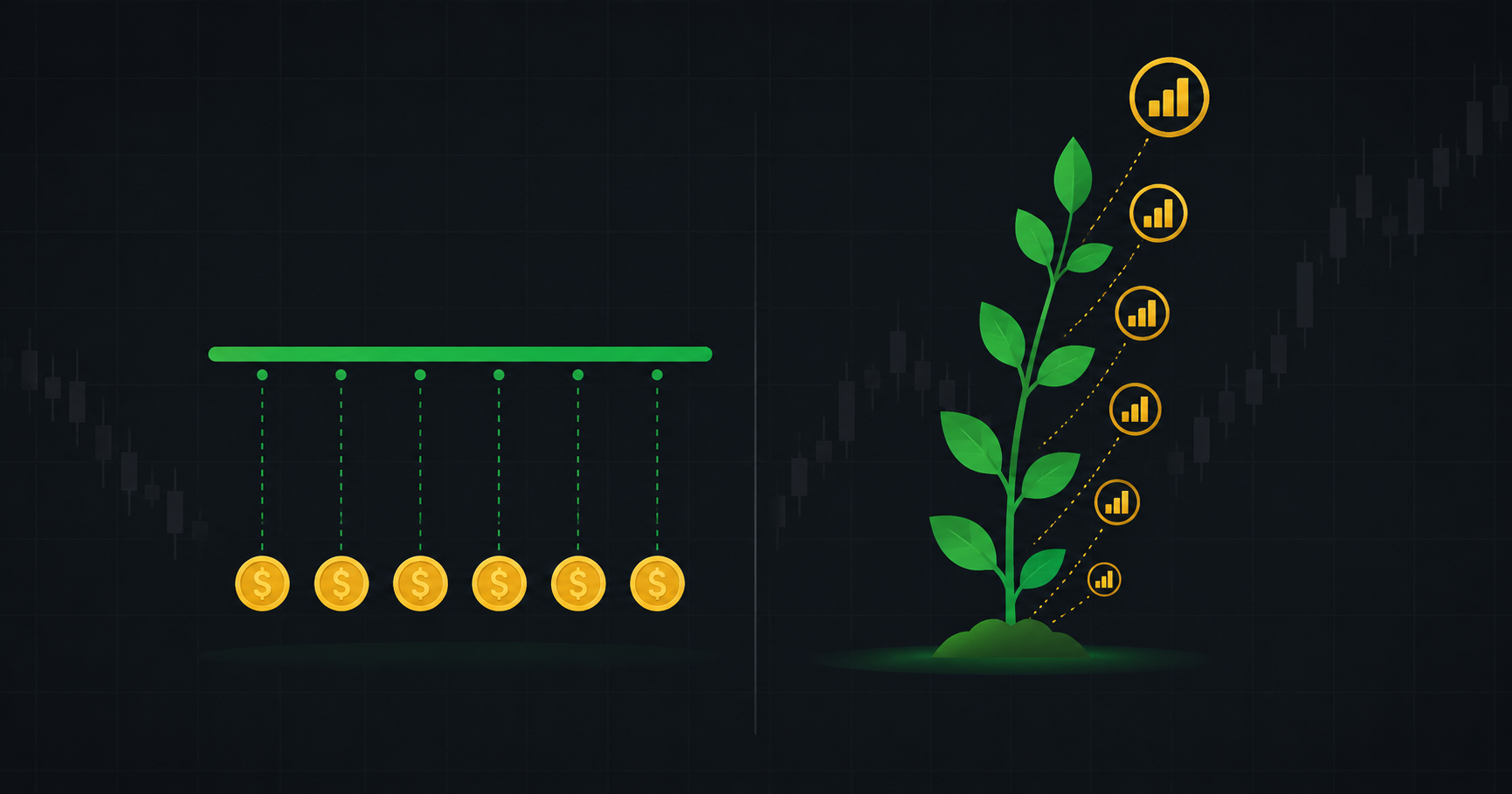
A covered-call ETF yielding 9 percent looks more attractive than a dividend stock yielding 3 percent at first glance. But the comparison changes the moment you look at where that income comes from, how it is taxed, and what happens to your principal over time. One strategy collects rent on assets it owns. The other sells future upside to generate today's income. For value investors who care about both cash flow and long-term compounding, the trade-offs are worth understanding carefully.
TL;DR
- Covered-call ETFs produce higher headline yields, often 7 to 11 percent, by selling call options, but this income comes at the cost of capped price upside.
- Dividend stocks typically yield 2 to 5 percent but retain full upside participation, ownership rights, and qualified dividend tax treatment.
- After taxes, the gap between these two income streams often narrows considerably, especially for investors in higher brackets.
- Covered-call ETFs are better suited for current income needs; dividend stocks may compound more effectively for long-term wealth building.
- The right choice depends on your time horizon, tax situation, and whether you need income now or growth over time.
Where the Income Comes From
Dividend stocks pay out a portion of company earnings directly to shareholders. A company earning $5 per share and paying $1.50 as a dividend is sharing real profit with owners. That dividend tends to grow over time if the business keeps growing, which makes it a compounding income stream tied to business performance.
Covered-call ETFs generate distributions differently. The fund owns a basket of stocks and sells call options against them. The premiums collected from selling those contracts are distributed to investors. When a call is exercised, the fund may sell shares near the strike price, then re-enter the position at the new market price.
The income is real, but it comes from selling part of the upside rather than from business profit sharing. This is a structural difference, not just a technical one.
The Yield Comparison in Numbers
Assume a $50,000 allocation and two strategies.
Covered-call ETF:
- Distribution yield: 9 percent
- Annual income: $4,500
- Federal tax rate (ordinary income at 32 percent): $1,440 owed
- After-tax income: $3,060
Dividend growth stock basket:
- Dividend yield: 3.2 percent
- Annual income: $1,600
- Federal tax rate (qualified dividends at 15 percent): $240 owed
- After-tax income: $1,360
After taxes, the covered-call ETF still produces more income in absolute terms. But the effective after-tax yield drops from 9 percent to about 6.1 percent, while the dividend basket delivers an after-tax yield of approximately 2.7 percent on the same $50,000. The covered-call ETF keeps roughly 68 percent of its gross income after taxes, while the dividend basket keeps 85 percent.
Now add five years of dividend growth at 7 percent annually. The dividend stock income grows to nearly $2,245 per year by year five. The covered-call ETF yield may stay flat or decline if NAV erodes. For further detail on that risk, see NAV erosion in covered-call ETFs.
Upside: Who Gets to Keep It?
This is where the comparison shifts most clearly.
A dividend stock investor owns shares of a business. If that business doubles its earnings over ten years and the market re-rates it accordingly, the investor captures that appreciation. Dividends grow. Share price grows. The investor participates fully.
A covered-call ETF investor captures some price return but repeatedly sells the right to benefit from stronger-than-expected moves. In a strong bull market, that can mean watching the index rally 25 percent while the ETF captures only 12 to 15 percent in price appreciation plus distributions.
This trade-off is deliberate and visible in the fund design. It is not a flaw if you need income today. But for investors in accumulation mode who want income and growth, repeatedly giving up upside has a compounding cost.
The covered-call ETFs and capped upside article walks through a multi-year scenario showing how this diverges over time.
Ownership and Quality: A Different Kind of Edge
When you buy dividend stocks, you own pieces of actual businesses. If you focus on wonderful companies with durable competitive advantages, steady cash flows, and manageable debt, you benefit from compounding business value over time.
When you buy a covered-call ETF, you own a fund that tracks an index and sells calls on top. The quality of the underlying businesses is set by the index methodology, not by valuation discipline. You may hold both strong and mediocre companies simultaneously.
For value investors who care about business quality, this is a real difference. Using Wall St. Yardie to run earnings yield and intrinsic value checks on individual dividend names lets you build an income portfolio anchored in fundamentals rather than index construction.
When Covered-Call ETFs Win
There are situations where the covered-call ETF is the better tool.
- You need current income now to fund living expenses and cannot wait for dividend growth to scale.
- You want simplicity. One fund purchase generates monthly distributions without picking individual stocks.
- You hold it inside a tax-advantaged account where ordinary income treatment does not matter.
- You want a defined income yield alongside a separate growth-oriented equity core.
In these contexts, covered-call ETFs work well as a dedicated income sleeve. The mistake is using them as a full equity replacement and expecting both high income and strong long-term compounding simultaneously.
What Could Go Wrong?
You choose a covered-call ETF for the yield without comparing after-tax income. The headline rate can be misleading for investors in higher tax brackets. Mitigation: Calculate after-tax yield using your marginal rate and compare it honestly against dividend alternatives.
You replace dividend growth stocks entirely and lose the compounding income growth. A 3 percent dividend growing at 7 percent annually beats a flat 9 percent ETF yield in after-tax terms in under 15 years for many investors. Mitigation: Keep at least a portion of income allocation in growing dividend businesses.
You ignore NAV trends in the covered-call ETF. If the fund is distributing more than it earns through premiums, it may slowly return your own capital. Mitigation: Track fund NAV over 12-month rolling periods alongside distribution receipts.
You hold covered-call ETFs in taxable accounts and pay ordinary income tax rates each year. This significantly reduces real return compared to using tax-advantaged accounts. Mitigation: Prioritize tax-sheltered accounts for covered-call ETF positions.
Next Steps
- Compare your current income needs against what a dividend growth portfolio could realistically deliver in years three through ten.
- Calculate after-tax yield for any covered-call ETF under consideration using your actual marginal tax rate.
- Review tax considerations for covered-call ETF income before finalizing your income strategy.
- Use Wall St. Yardie to identify quality dividend names trading at reasonable valuations alongside any covered-call ETF sleeve.
- Decide on a clear role for each tool: covered-call ETF for current income, dividend stocks for growing income and long-term compounding.
*Disclaimer: This content is for educational purposes only and does not constitute financial advice. Past performance does not guarantee future results. Always conduct your own research before investing.*