
Step 16: Develop the Right Mindset
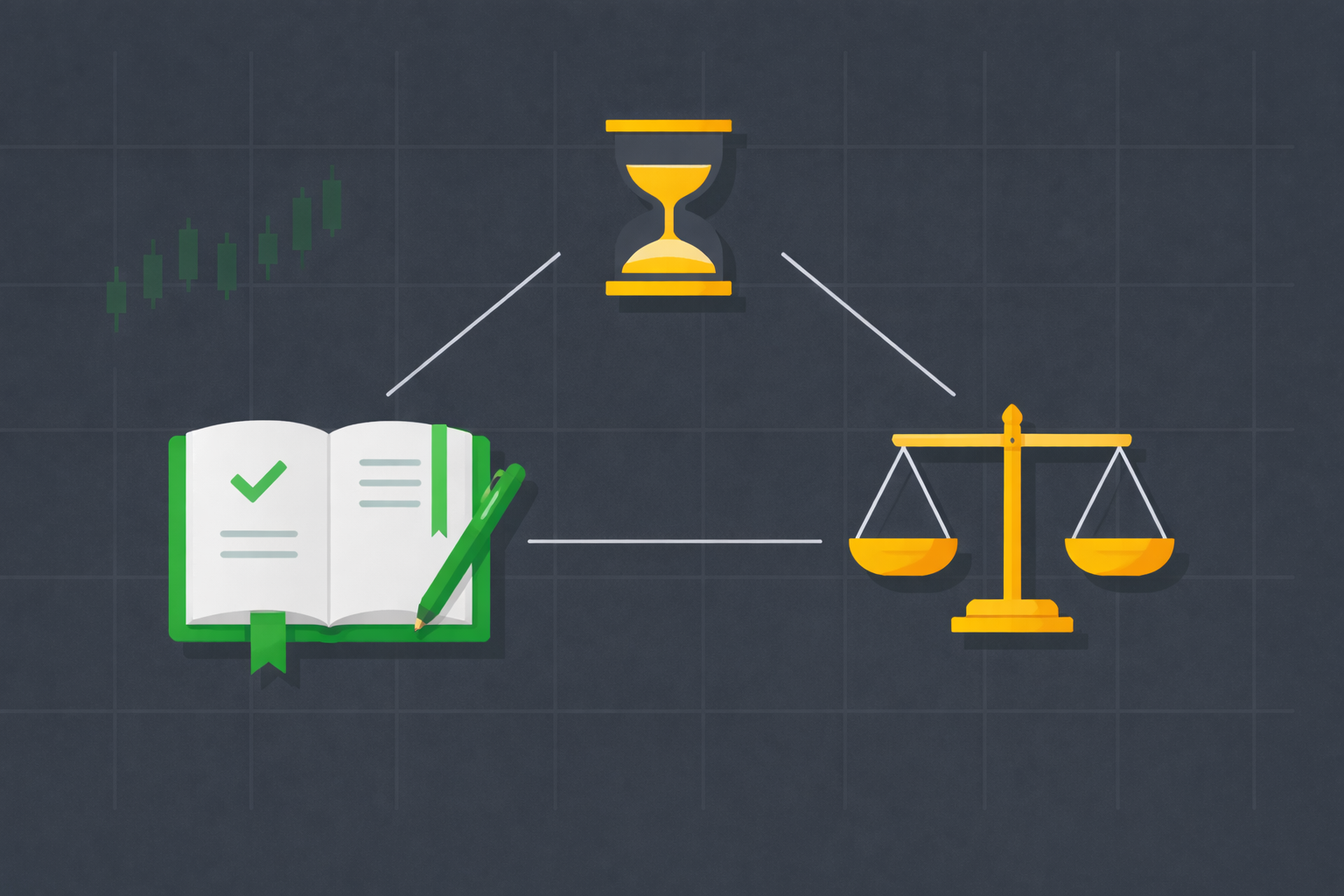
Great research fails when impatience takes the wheel. Step 16 is where you wire discipline into your daily routine so every trade feels boring—in a good way. A steady mindset keeps you from forcing entries, chasing premiums, or bailing on a thesis when price wobbles.
TL;DR
- Build a pre-trade ritual: valuation check, risk check, journal note, and a 60-second pause
- Decide feelings ahead of time: how you’ll respond to assignment, drawdowns, or a missed fill
- Use position sizing as emotional insurance; small trades protect calm thinking
- Track mindset metrics (sleep, distraction, FOMO triggers) alongside P&L
- Practice waiting: “no trade” days are wins when prices don’t meet your valuation
Mindset is a system, not a mood
Hope, fear, and greed show up when rules are fuzzy. A simple system keeps feelings contained:
- Daily scan with intent: Review watchlist, fair values, and upcoming catalysts. If nothing meets your margin of safety, log “no trade” and move on.
- Pre-trade pause: Before clicking, read your thesis aloud and confirm size. If you feel urgency, set a timer for 60 seconds; the urge often fades.
- Post-trade reflection: Write two sentences: what you expected, what surprised you. Over time you’ll spot emotional patterns faster than price patterns.
For more emotional guardrails, revisit /blog/psychology-of-value-investing-with-options/psychology-options-patience-training and the checklist in /blog/psychology-of-value-investing-with-options/psychology-options-checklist.
A simple routine you can repeat
- Morning review (15 minutes): Update fair values in the Wall St Yardie app, note price vs. value gaps, and list candidates.
- Risk scan (5 minutes): Earnings dates, IV levels, liquidity; if spreads are wide, skip.
- Trade rehearsal (2 minutes): Write the order you intend to place, including exit plan and how you will handle assignment.
- Cool-down (1 minute): Breathe, reread the plan, then place the order—or decide to wait.
A calm numerical example
You want to sell a cash-secured put at $50 on a business you value at $65. Premium is $1.80 for 30 DTE. Before entering, you check size: $5,000 at risk is 5% of a $100,000 portfolio—too high. You reduce to one contract and accept $180 premium. If the price never hits your limit, you record “no fill, thesis intact” instead of chasing a $52 strike. The mindset rule (size cap + patience) protects you from emotional drift.
Measure your mindset like any other metric
- Attention score: Rate your focus 1–5 before trading. If it is below 3, skip the session.
- Stress triggers: Note what raised your heart rate—a price alert, a news headline, or an open loss. Rewrite your playbook to mute or schedule those inputs.
- Time spent: Track minutes watching screens. Cap it to two check-ins per day so your decisions stay deliberate.
- Confidence check: Each Friday, ask, “Would I make these trades again?” If not, shrink size next week and rewrite the checklist you broke.
Treat these as early warning lights. If focus and confidence fall, the next bad trade usually comes from emotion, not logic.
Build resilience during volatility
- Pre-commit to ranges: Decide now how you will act at a 5%, 10%, or 15% market drop. Maybe you add only if fundamentals and valuation still agree.
- Stagger entries: Split one large idea into two smaller trades a week apart. Fewer simultaneous decisions keep emotions steady.
- Use “if/then” scripts: “If IV spikes above my threshold, then I sell CSPs 20% below fair value; if IV is low, then I wait.” Scripts remove debate when markets are noisy.
- Protect conviction names: If one holding dominates your thoughts, test a single protective put so you learn hedging without oversizing.
Train your reactions ahead of time
- Assignment: If assigned, your plan is to sell a covered call above fair value or hold long-term if fundamentals remain.
- Drawdowns: A 10% drop after entry triggers a review, not a panic sale. Confirm the thesis; if intact, consider adding at better value.
- Missed moves: When price runs without you, log it and wait for the next setup. Chasing violates your margin of safety.
Small rituals beat willpower. With repetition, they become automatic and keep you steady when volatility rises.
What could go wrong?
- Emotional stacking: Multiple losing days compound frustration. Mitigation: stop after a set number of orders per day and journal feelings.
- Information overload: Too many alerts pull you into reactive mode. Mitigation: limit inputs to scheduled check-ins and curated watchlists.
- FOMO trades: Buying because price moved, not because value changed. Mitigation: require a written valuation note before any order.
- Sleep and focus dips: Fatigue leads to sloppy sizing. Mitigation: track sleep and decide size the night before, when you are calm.
Next steps
- Define a daily pre-trade and post-trade ritual in your journal
- Set a maximum trades-per-day rule and a 60-second pause before every order
- Update fair values in the Wall St Yardie app and log “no trade” days proudly
- Write your response plan for assignment, drawdowns, and missed fills
- Track one mindset metric (sleep, stress, distraction) alongside P&L for the next month
*Disclaimer: This content is for educational purposes only and does not constitute financial advice. Past performance does not guarantee future results. Always conduct your own research before investing.*